Warehouse Maintenance: A Practical Guide to Safety and Uptime
A warehouse only ships when its racking, dock doors, conveyors, and forklifts all work — and that reliability comes from a maintenance plan, not luck.
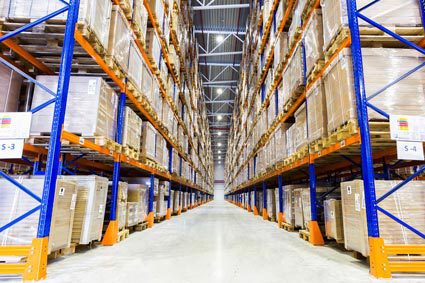
What is warehouse maintenance?
Warehouse maintenance is the ongoing work of inspecting, servicing, and repairing the equipment and building systems that keep a distribution or storage facility running safely. It spans a wide asset base: pallet racking, dock levelers and doors, conveyors and sortation, forklifts and other material handling equipment (MHE), HVAC, lighting, and the concrete floors that carry all of it.
The goal is simple to state and hard to do consistently — keep assets available and safe while controlling repair costs. A failed dock leveler stalls receiving. A cracked racking upright risks collapse. A forklift down for parts pulls throughput off the floor. Warehouse maintenance is how you get ahead of those failures instead of reacting to them.
Types of warehouse maintenance
Warehouse maintenance work generally falls into four strategies, each with a different tradeoff between cost and predictability.
| Type | What it means |
|---|---|
| Preventive (scheduled) | Planned tasks performed on a set interval — machinery, lighting, and essential systems serviced before they fail, not after. |
| Corrective | Repairs made after equipment has already failed — a jammed conveyor, damaged shelving, a dead forklift. Necessary for unplanned incidents, but costlier and less predictable than prevention. |
| Equipment maintenance | Proactive upkeep of specific assets — forklifts, pallet jacks, conveyors — hydraulic checks, tire replacement, control and safety-system testing. |
| Facility management | Upkeep of the building itself — lighting, HVAC, plumbing, electrical. Left unchecked, a roof leak or a wall crack turns into a much costlier repair. |
What does warehouse maintenance cover?
Warehouse maintenance covers every asset that touches storage, movement, and the building envelope — grouped into six areas that each need their own schedule and inspection standard.
- Pallet racking: inspect for bent uprights, damaged beams, missing safety clips, and overloaded bays. Damage from forklift strikes is the leading cause of rack failure, so log and repair it fast.
- Dock doors and levelers: service seals, springs, chains, hydraulics, and vehicle restraints. These cycle constantly and are a top source of both downtime and injury.
- Conveyors and sortation: check belts, rollers, motors, bearings, and emergency stops. A single jammed section can back up an entire pick line.
- Forklifts and MHE: follow OEM service intervals, plus daily operator checks on forks, tires, hydraulics, brakes, and batteries or LP tanks.
- HVAC and lighting: maintain heating, cooling, and ventilation for climate-sensitive stock and worker comfort, and keep high-bay and emergency lighting functional.
- Floors and building: repair concrete cracks, joint spalling, worn line striping, and roof or drainage issues before they spread.
Racking, dock, and MHE damage rarely announces itself. Structured inspection routes — not one-off notices — are what surface it early enough to fix cheaply.
Why it matters
Routine maintenance is the frontline defense against warehouse accidents. It’s how you catch equipment malfunctions, structural weaknesses, and hazards like electrical defects before they hurt someone or damage inventory. Regular inspection and servicing of forklifts and pallet racking catches these problems while they’re still cheap to fix.
It also extends equipment life. Constant operation wears down machinery and material handling systems, and preventive intervention — replacing worn components, lubricating moving parts, calibrating equipment — slows that wear and prevents the sudden failures that cause costly downtime.
Building a preventive maintenance schedule
A preventive maintenance schedule assigns each warehouse asset a cadence based on how hard it works and how badly it hurts when it fails. High-cycle, high-consequence assets like dock doors and forklifts get frequent attention; slower-wearing systems like racking and floors ride longer intervals with sharp inspection standards.
Use the table below as a starting framework, then tune it to your run hours, shift count, and manufacturer guidance. A preventive maintenance system turns these intervals into recurring, auto-generated tasks so nothing depends on someone remembering.
| Warehouse asset | Typical maintenance cadence | What to check |
|---|---|---|
| Forklifts / MHE | Daily operator check; PM every 200–250 hrs | Forks, tires, hydraulics, brakes, battery/LP |
| Dock doors & levelers | Monthly to quarterly | Seals, springs, chains, hydraulics, restraints |
| Conveyors / sortation | Monthly, with weekly quick checks | Belts, rollers, motors, bearings, e-stops |
| Pallet racking | Quarterly formal; ongoing damage reports | Uprights, beams, clips, load ratings |
| HVAC | Quarterly to semi-annual | Filters, belts, coils, refrigerant, controls |
| Lighting | Semi-annual; monthly emergency test | Fixtures, high-bay LEDs, exit/egress lighting |
| Floors & building | Annual, plus as-needed repairs | Cracks, joints, striping, roof, drainage |
The safety and OSHA angle
Warehouse maintenance is a safety program as much as a reliability one, because most of these assets can injure people when they fail. OSHA’s Powered Industrial Trucks standard (29 CFR 1910.178) requires forklifts to be examined before each shift and removed from service when unsafe, and its walking-working surfaces rules cover the floors, guarding, and egress lighting you maintain.
Practical safety maintenance means daily forklift inspections that are actually recorded, damaged racking tagged and blocked from use until repaired, dock restraints and lighting kept functional, and clear documentation of every inspection and fix. That inspection trail matters twice: it prevents incidents, and it demonstrates due diligence if an inspector or insurer ever asks. Keeping spares on hand for high-failure parts — dock springs, conveyor bearings, forklift filters — keeps a safety-critical repair from waiting on a purchase order; see maximizing spare parts inventory for how to stock without overspending.
Fire and emergency equipment readiness
Warehouses carrying flammable materials or running high-voltage equipment face real fire risk, so a maintenance checklist should include regular testing of fire extinguishers, sprinkler systems, and smoke detectors. Infrared thermal scanning of electrical panels can catch hotspots before they ignite. Keep emergency exits clear and visible, and don’t overlook the smaller safety fixtures — eyewash stations and first-aid kits need the same scheduled checks as any other safety equipment.
Train staff to catch problems early
Warehouse staff are the first line of defense against developing maintenance issues, but only if they know what to look for. Train operators to recognize early signs of wear, leakage, or misalignment in the equipment they use daily — conveyors, lighting, forklifts — and run periodic refreshers on safety protocols and hazard identification.
Document training the same way you document maintenance: dated records, a shared knowledge base, and a clear way for someone to report what they noticed before it becomes an unplanned work order.
How a CMMS coordinates warehouse maintenance
A CMMS coordinates warehouse maintenance by putting every asset, schedule, work order, inspection, and spare part in one system that the whole team works from. Instead of spreadsheets and paper checklists spread across shifts, PM tasks auto-generate on their cadence, technicians receive and close work orders from a mobile device on the floor, and every repair builds a service history against the specific rack line, dock, or forklift.
A warehousing and distribution CMMS lets you schedule tasks by time, usage hours, or mileage, so each asset gets attention on the terms that actually predict its failures. Dashboards and failure-trend reports surface the problem equipment early — the forklift that’s failed twice this month is a candidate for repair-or-replace review, not another work order. Condition-monitoring vendors can even feed readings straight in — a sensor flags a conveyor motor trending hot and a work order opens automatically. If you’re comparing options, our best CMMS software comparison walks through what to weigh for a warehouse operation.
See warehouse maintenance run in one system
eWorkOrders has kept maintenance moving for 31 years at 99.99% uptime, for operations from single warehouses to names like McDonald’s and ASSA ABLOY — rated 4.9 on Capterra and G2. We configure the system to fit your assets in a single 90-minute to two-hour session, with unlimited-user pricing so every shift can log in.
Frequently Asked Questions
How often should warehouse racking be inspected?
Conduct a formal, documented racking inspection at least quarterly, and log any forklift damage the moment it happens. Damaged uprights or beams should be tagged and taken out of service until repaired, since rack failure is both a downtime and a life-safety risk.
What are the most common warehouse maintenance tasks?
The highest-frequency tasks are daily forklift inspections, dock door and leveler service, conveyor belt and bearing checks, HVAC filter changes, lighting upkeep, and racking damage repair. High-cycle assets like docks and forklifts need the most attention.
What does OSHA require for forklift maintenance?
OSHA’s Powered Industrial Trucks standard (29 CFR 1910.178) requires forklifts to be examined before each shift, or at least daily, and removed from service if any condition makes them unsafe. Records of those inspections should be retained.
How does a CMMS help with warehouse maintenance?
A CMMS centralizes assets, PM schedules, work orders, inspections, and spare parts, then auto-generates recurring tasks and tracks repair history per asset. It gives managers the data to reduce downtime, prove compliance, and see which equipment costs the most to keep running.
About the author: Janet Jaquis is a CMMS software specialist with 8+ years of experience at eWorkOrders, where she covers maintenance management best practices for facility and maintenance professionals. Before eWorkOrders, she built her product marketing career at AT&T WorldNet. She holds a degree in Marketing and is a former Project Management Professional (PMP).


