CMMS for HVAC Maintenance: Schedules, Monitoring & Efficiency
HVAC is usually the largest and most complex system in a commercial building, and when it fails, comfort, air quality, and energy costs all suffer at once. This guide covers what HVAC maintenance includes, how to manage it with a CMMS, how monitoring and fault detection turn into work orders, a preventive maintenance schedule by frequency, seasonal changeovers, warning signs, repair-or-replace decisions, and the KPIs worth tracking.
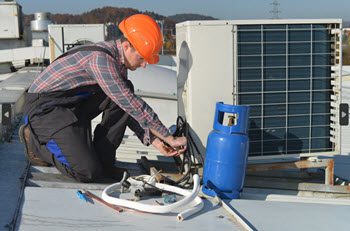
What Is HVAC Maintenance?
HVAC maintenance is the scheduled inspection, cleaning, adjustment, and repair of a building’s heating, ventilation, and air conditioning equipment. The goal is to keep the system running efficiently, maintain comfort and indoor air quality, and catch problems before they turn into breakdowns.
Well-maintained HVAC equipment uses less energy, lasts longer, and fails less often. Neglected equipment does the opposite: dirty filters and coils make fans and compressors work harder, worn belts slip, and small refrigerant leaks slowly cut capacity until a unit can’t keep up on the hottest day of the year.
How Maintenance Improves HVAC Efficiency and Lifespan
Most of the efficiency and service life an HVAC system loses over time comes from a handful of maintenance problems. Fixing them is usually the cheapest energy savings a building can find.
| Problem | Effect on Efficiency | Effect on Lifespan |
|---|---|---|
| Dirty filters | Restrict airflow, so fans use more power to move the same air | Strain fan motors and let dust reach coils |
| Dirty coils | Reduce heat transfer, so compressors run longer to hit setpoint | Higher operating pressures and temperatures wear compressors faster |
| Worn or loose belts | Slipping wastes energy and reduces airflow | Wear pulleys and bearings |
| Low refrigerant | Cuts cooling capacity, so units run longer | Can overheat compressors, the most expensive part to replace |
| Economizer not working | Misses free cooling from outside air, or brings in unwanted outside air | Adds run hours to cooling equipment |
| Wrong schedules or setpoints | Heats and cools empty spaces | Adds unnecessary run hours |
The pattern is the same across all of them: small, cheap tasks done on schedule protect the most expensive components. That’s why the preventive schedule below matters more than any single repair.
How to Manage HVAC Maintenance with a CMMS
A CMMS (computerized maintenance management system) is where HVAC maintenance gets organized: every unit, every scheduled task, every repair, and every comfort call in one place. Here’s how teams typically set it up:
- 1. Add every unit as an asset. Record each air handler, rooftop unit, boiler, chiller, and cooling tower with its location, make, model, serial number, refrigerant type, and install date.
- 2. Attach preventive maintenance schedules. Load the monthly, quarterly, semi-annual, and annual tasks for each unit (see the schedule below), so work orders are created automatically when they’re due.
- 3. Route comfort calls into work orders. Hot, cold, noise, and leak complaints go into the same system, tied to the unit or zone, instead of arriving by email or phone.
- 4. Connect monitoring where you have it. Alerts from a building automation system or sensors can create or prioritize work orders (more on this below).
- 5. Track parts. Keep filters, belts, and common parts stocked with min/max levels so they’re on hand before the PM is due.
- 6. Review the history. Use each unit’s work order history to spot repeat failures, compare costs, and plan replacements.
The result is HVAC work orders that are integrated with the equipment itself: every task, part, and cost is recorded against the unit it was done on. See preventive maintenance software and work order management.
HVAC Monitoring, Coil Monitoring, and Fault Detection with a CMMS
Scheduled maintenance works on the calendar. Monitoring adds a second trigger: the equipment’s actual condition. When monitoring is connected to a CMMS, a reading that crosses a limit can become a work order automatically, so the problem is fixed based on evidence instead of waiting for the next PM or a complaint.
| What’s Monitored | What It Can Reveal | Typical Work Order |
|---|---|---|
| Coil pressure drop | A coil is loading up with dirt and restricting airflow | Clean the coil |
| Filter pressure drop | A filter has reached its limit | Replace the filter |
| Supply and return temperatures | Low temperature difference across a coil points to capacity loss, often low refrigerant or a dirty coil | Inspect coil and refrigerant charge |
| Motor current and vibration | Bearing wear, belt problems, or misalignment | Inspect fan, belts, and bearings |
| Run hours | Usage-based service is due | Run-hour-based PM |
| BAS fault alarms | Automated fault detection and diagnostics (FDD) rules flag issues like stuck dampers or simultaneous heating and cooling | Investigate the fault |
Coil monitoring is one of the most useful places to start, because dirty coils quietly raise energy use and strain compressors long before anyone complains. Watching pressure drop or temperature difference across the coil lets you clean it when it actually needs it, rather than too early or too late.
Monitoring in eWorkOrders: eWorkOrders supports MQTT-based monitoring from pre-configured sensors or gateways, including temperature, humidity, rain, water levels, flooding, alarms, and other equipment measurements such as pressure. The available documentation does not identify specific sensor brands or building automation systems. Integration availability may vary; contact eWorkOrders support to confirm compatibility with a particular device or system.
For more, see IoT integration in CMMS systems and condition-based maintenance strategies.
What HVAC Maintenance Covers
| Component | What to Maintain |
|---|---|
| Air filters | Replace on schedule or when pressure drop across the filter reaches its limit |
| Coils (evaporator and condenser) | Clean to keep heat transfer efficient; check for damage and corrosion |
| Fans, belts, and motors | Check belt tension and wear, bearings, alignment, vibration, and motor amperage |
| Rooftop units (RTUs) | Inspect panels, seals, economizers, condensate drains, and electrical connections |
| Refrigerant circuit | Check pressures and temperatures, look for leaks and oil stains |
| Condensate drains and pans | Clear clogs and treat to prevent water damage and microbial growth |
| Boilers and furnaces | Burner inspection, combustion tuning, safety controls, flue and venting |
| Chillers and cooling towers | Water treatment, tube cleaning, oil and refrigerant analysis, tower fill and basin cleaning |
| Ductwork and dampers | Check for leaks, damper operation, and cleanliness |
| Controls and thermostats | Calibrate sensors, verify schedules and setpoints, check building automation alarms |
HVAC Preventive Maintenance Schedule
Frequencies depend on the equipment, how hard it runs, and the environment. Use this as a typical starting point, then adjust using the manufacturer’s recommendations and your own failure history.
| Frequency | Typical Tasks |
|---|---|
| Monthly | Check filters and replace if needed; inspect belts; check condensate drains; walk equipment for unusual noise, vibration, or leaks; review control alarms |
| Quarterly | Replace filters (if not done by pressure drop); check motor amperage and bearings; inspect economizer operation; check thermostat and sensor readings |
| Semi-annually | Seasonal changeover (see below); clean coils; check refrigerant pressures; tighten electrical connections; lubricate where required |
| Annually | Full inspection of each unit; boiler and burner service and combustion analysis; chiller inspection; duct and damper check; controls calibration; review each unit’s repair history |
High-dust sites, hospitals, labs, and other critical environments usually need shorter intervals, especially for filters. For a printable version, see the commercial HVAC maintenance checklist. Boiler work is covered in more detail in the boiler maintenance checklist.
Seasonal HVAC Changeovers
Spring: Preparing for Cooling
- Clean condenser and evaporator coils
- Check refrigerant pressures and look for leaks
- Inspect and clear condensate drains and pans
- Test cooling operation and economizer controls
- Replace filters and inspect belts before peak load
Fall: Preparing for Heating
- Service boilers and furnaces; inspect burners and heat exchangers
- Test safety controls, flame sensors, and ignition
- Check flues and venting for blockages
- Protect coils and piping in unheated spaces from freezing
- Switch control schedules and setpoints for heating season
Changeovers are a natural time to schedule larger work, before the equipment is under full load. For the rest of the building, see the facility maintenance guide.
Warning Signs of HVAC Problems
- Hot and cold complaints in areas that used to be comfortable
- Rising energy use without a change in weather or occupancy
- Short cycling: units turning on and off frequently
- Unusual noises: squealing belts, grinding bearings, rattling panels
- Water around units, in drain pans, or on ceilings below equipment
- Ice on refrigerant lines or coils, often a sign of low refrigerant or airflow problems
- Odors: musty smells from drains or ducts, or burning smells from motors or electrical parts
- Frequent repeat work orders on the same unit
Many of these can be caught earlier with condition monitoring. See condition-based maintenance strategies.
Repair or Replace an HVAC Unit?
At some point, repairing an aging unit costs more than replacing it. A few factors usually decide it:
- Age. Compare the unit’s age with its expected service life. ASHRAE publishes median service life estimates for common equipment types that are a useful reference.
- Repair history. Rising repair frequency and cost on the same unit is the clearest signal.
- Efficiency. Newer equipment is often significantly more efficient, so energy savings can offset part of the replacement cost.
- Refrigerant. Units using phased-out refrigerants get more expensive to service over time.
- Criticality. Units serving critical areas justify replacing earlier, before a failure.
A simple check: add up the last two years of repair costs for a unit. If that total is approaching a large share of replacement cost and the unit is near the end of its expected life, it belongs on the capital plan. That analysis is only possible if every repair is recorded against the unit.
HVAC Maintenance KPIs
| KPI | How to Calculate It |
|---|---|
| HVAC PM Completion Rate | (HVAC PM work orders completed on time ÷ HVAC PM work orders due) × 100 |
| Mean Time Between Failures (MTBF) | Operating hours ÷ Number of failures |
| Reactive Work Share | (HVAC reactive work orders ÷ Total HVAC work orders) × 100 |
| Comfort Complaints | Hot/cold calls per month, per building or zone |
For example: a rooftop unit that runs all year (8,760 hours) and failed 4 times has an MTBF of 8,760 ÷ 4 = 2,190 hours, about one failure every three months. Tracking that number by unit shows which ones are getting worse. For more on failure metrics, see MTTR, MTBF, and MTTF explained.
Safety and Compliance Notes
- Refrigerant handling. In the U.S., technicians who service equipment containing refrigerants must be certified under EPA Section 608. Many facilities rely on licensed contractors for this work.
- Lockout/tagout. Always isolate energy before servicing fans, motors, and electrical components. See what lockout/tagout is.
- Boilers and pressure vessels. Inspection requirements are typically set by state or local authorities and insurers.
- Roof access. Follow fall protection rules when working on rooftop units.
Frequently Asked Questions
How do I manage HVAC maintenance with a CMMS?
Add every HVAC unit to the CMMS as an asset, attach preventive maintenance schedules so work orders are created automatically, route comfort calls into work orders, track filters and parts, and use each unit’s history to spot repeat failures and plan replacements.
Can a CMMS connect to HVAC monitoring and fault detection?
Many CMMS platforms can receive readings or alerts from sensors, such as pressure, temperature, or alarm signals, and turn them into work orders. eWorkOrders supports MQTT-based monitoring from pre-configured sensors or gateways, including temperature, humidity, water levels, flooding, alarms, and equipment measurements such as pressure. Compatibility with a specific device or building automation system should be confirmed with eWorkOrders support.
How often should commercial HVAC systems be maintained?
Most commercial systems get monthly checks, quarterly filter and component service, semi-annual seasonal changeovers, and a full annual inspection. Exact intervals depend on the equipment, how hard it runs, the environment, and the manufacturer’s recommendations.
How often should HVAC filters be changed in a commercial building?
Commonly every one to three months, but the best approach is to change filters based on pressure drop across the filter, or more often in dusty or critical environments like hospitals and labs.
What is included in HVAC preventive maintenance?
Typical tasks include filter replacement, coil cleaning, belt and motor checks, condensate drain cleaning, refrigerant pressure checks, electrical connection tightening, controls calibration, and seasonal changeovers between heating and cooling.
When should an HVAC unit be replaced instead of repaired?
Consider replacement when a unit is near or past its expected service life, repair costs are rising, efficiency is poor compared with newer equipment, or it uses a phased-out refrigerant. A unit’s repair history is the best evidence for the decision.
Who can service HVAC refrigerant?
In the U.S., technicians who work on equipment containing refrigerants must hold EPA Section 608 certification. Facilities without certified staff typically use licensed HVAC contractors for refrigerant work.
Conclusion
HVAC maintenance pays off in comfort, air quality, energy costs, and equipment life. Keep a complete list of units, follow a preventive schedule by frequency, use seasonal changeovers to prepare for peak loads, watch for warning signs, and record every repair so you know when a unit is due for replacement.
Manage Every HVAC Unit in One CMMS
Filter changes, coil cleaning, and seasonal changeovers only happen on time when they’re scheduled and tracked. That’s the job of CMMS software for facilities management. eWorkOrders has supported maintenance operations for over 30 years, serving teams at Honda and King River Packaging, rated 4.9 on Capterra and G2.
About the author: Janet Jaquis is Marketing Director at eWorkOrders, where she writes about maintenance strategy, asset reliability, and CMMS software for maintenance and facility teams.


