Commercial Roof Winter Maintenance: 8 Checks to Prevent Leaks
Most winter leaks on commercial flat roofs start at clogged drains, open seams and the flashing around rooftop units, not out in the middle of the roof. Water that can’t drain freezes, backs up and finds a way inside, usually over somebody’s desk or an electrical room. This guide covers the eight roof checks to run before and during winter, how to think about heavy snow, and what to write down after every storm.
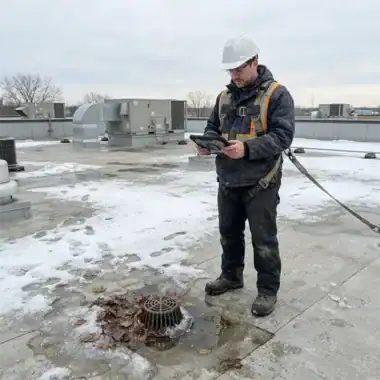
Quick Answer: Where Winter Roof Leaks Start
| Area | What to look for |
|---|---|
| Drains, scuppers and gutters | Leaves, debris, ice and standing water |
| Seams and flashing | Open laps, cracked sealant, loose metal edge and parapet caps |
| Rooftop units and curbs | Loose access panels, open curb flashing, frozen condensate lines |
| Penetrations | Pitch pans, pipe boots, vent and exhaust fan flashing |
| Snow and ice | Drifts against walls and parapets, ice at edges and downspouts |
| Inside the building | Ceiling stains, drips and wet insulation on the top floor |
Why Is Winter So Hard on Commercial Roofs?
A roof that looked fine in October can start leaking in January without anyone stepping on it.
- Freeze and thaw opens small cracks in sealant and seams a little more every cycle.
- Ice blocks drains, so meltwater ponds and works its way under laps and flashing.
- Snow adds weight, and drifts pile it up in the same few places.
- Leaks show up late and far away. Water travels along the deck, so the stain is rarely right under the hole.
1. How often should you check roof drains in winter?
Check roof drains, scuppers and gutters before winter and after every major storm, because a blocked drain is the fastest way to put water inside. Clear leaves and debris, make sure strainer domes are in place, and check that overflow scuppers are open. If drains have heat cable, confirm it’s working before the first freeze.
2. What should you look for on roof seams and flashing before winter?
Look for open seams, cracked sealant and loose metal edge, and get them repaired before the first hard freeze. Walk the perimeter and check parapet caps and counterflashing, where wind and ice do the most damage. Check your roof warranty before anyone patches anything, since many manufacturers spell out who can make repairs and how.
3. How do you check rooftop units before winter?
Check the curbs, access panels and condensate lines on every rooftop unit, because they’re among the most common leak points after drains. Make sure access panels are screwed down, curb flashing is tight, and condensate lines and traps won’t freeze. Look for damage from service techs walking or dropping tools around the units over the year.
4. Which roof penetrations leak most in winter?
Pitch pans, pipe boots and vent flashings leak most, because sealant shrinks and cracks in the cold. Check every penetration: plumbing vents, exhaust fans, conduit and gas lines. Pitch pans that have pulled away from the pipe need refilling or replacement by your roofer, using materials the roof manufacturer allows.
5. How much snow is too much on a commercial roof?
That depends on the roof’s design snow load, so get your number from the building drawings or a structural engineer before a big storm, not during one. Drifts against parapets, at roof steps and around rooftop units weigh far more than the flat snow around them. Inside, watch for sagging ceilings, doors that suddenly stick, new cracks or popping sounds; if you see them, move people out of the area and call an engineer.
- Use trained crews or a roofing contractor for snow removal, and follow your fall protection program.
- Use plastic shovels and leave a thin layer of snow to protect the membrane.
- Stay away from edges, skylights and roof hatches, and don’t pile removed snow in one spot on the roof.
6. How do you prevent ice dams on commercial roofs?
Keep warm air from reaching the roof at the eaves, and keep gutters and downspouts open so meltwater can drain. Ice dams form on sloped sections where heat escapes through the roof, melts snow, and the water refreezes at the cold edge. Check attic insulation and air leaks, make sure heat cables (if installed) work, and clear frozen downspout outlets. Rope off walkways under icicles.
7. Who should be allowed on the roof in winter?
Keep roof access to trained, authorized people, and log every trip up. Foot traffic on a cold membrane causes damage, and ice causes falls. A roof access log tells you who was up there when a leak shows up the next week. Keep walkway pads clear and make sure skylights are guarded the way your safety program requires. Nobody goes up alone in snow or ice.
8. What should you check inside the building after a winter storm?
Walk the top floor after every storm and look up, because ceiling stains and drips are often the first sign of a roof leak. Check under rooftop units and drains, and in electrical and IT rooms first. Write down the exact location of each stain, put out buckets, and open a work order for the roofer. Leaks that keep showing up in the same room usually trace back to the same drain or curb.
How Does a CMMS Help With Commercial Roof Maintenance?
A CMMS helps facility teams keep roof inspections on schedule, log every leak by building and location, and see when the same problem keeps coming back. Finding drain and flashing problems before snow and ice arrive makes repairs easier and helps protect the building and everything inside it.
- Before winter: Schedule recurring roof inspections for the fall and after major storms so drains, flashing and rooftop units are checked before snow and ice arrive.
- When a leak is reported: Building staff can submit a service request right away, and each leak becomes a work order tied to its building and location.
- Over time: Review work order history by location to find repeat leaks, see what the roofing contractor did last time and plan permanent repairs for suitable weather.
eWorkOrders provides tools to manage preventive maintenance, service requests and work orders across buildings and locations. The preventive maintenance software and service request interface help organize roof maintenance. For additional planning resources, visit the free eWorkOrders maintenance checklist library, which includes checklists for different equipment and maintenance tasks.
Frequently Asked Questions
What commercial roof maintenance should be done before winter?
Clear drains, scuppers and gutters, check seams and flashing, and look at rooftop unit curbs and other penetrations for openings. Any problems found should be repaired by a qualified roofer before snow and ice arrive.
How do you prioritize commercial roof repairs before winter?
Start with active leaks, blocked drains and damage over critical areas such as electrical rooms, server rooms or occupied spaces. Then schedule open flashing and seam repairs, and check your roof warranty so the work is done by an approved contractor.
How often should a commercial roof be checked during winter?
Check roofs after heavy snow, ice storms and freeze-thaw cycles, and walk the interior for new stains or drips. Only trained crews with fall protection should go on the roof, and snow load concerns should go to a structural engineer.
What should be done with roof repairs that can’t be completed in winter?
Make a temporary repair to stop the water, document the location and conditions, and keep the work order open. Permanent repairs can be scheduled for weather the roofing manufacturer allows, so the leak isn’t forgotten once it stops dripping.
Final Thoughts
Most winter roof leaks are drain and flashing problems that were there in the fall. Clear the drains, close up the seams, know your snow load, and walk the top floor after every storm. Write down where every leak shows up, and the pattern will point you to the fix.
Keep Roof Checks on Schedule All Winter
Start with our free commercial property maintenance checklist, then put roof inspections on a schedule. eWorkOrders has supported maintenance operations for over 30 years, serving teams at Honda and Kings River Packing, rated 4.9 on Capterra and G2.
This article is general information for maintenance teams, not engineering, legal or safety advice. Always follow the equipment manufacturer’s instructions, your organization’s safety procedures, and the codes and requirements of your authority having jurisdiction, and use qualified professionals for work that calls for them.
About the author: Janet Jaquis is Marketing Director at eWorkOrders, where she writes about maintenance strategy, asset reliability, and CMMS software for maintenance and facility teams.