Pump Maintenance Checklist
A pump rarely fails without warning. Cavitation, seal leakage, bearing wear, and misalignment typically show up first as a change — a new sound, a rising vibration reading, a slow drip, a shift in discharge pressure — before the pump actually goes down. This checklist covers recommended inspection, testing, and documentation tasks for centrifugal and other rotodynamic pumps used in commercial and industrial facilities. Check items off right here, or print the page — no download, no email required.
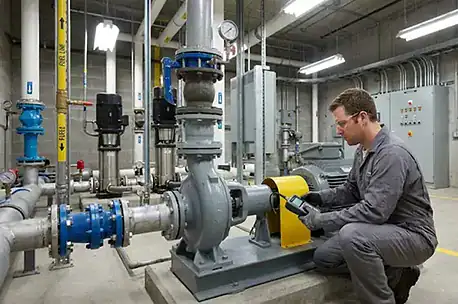
Before any hands-on task: de-energize the power source and follow your facility’s lockout/tagout procedures before lubricating, adjusting, or opening any part of the pump. Restore power and remove locks/tags only once the work is complete and the area is clear.
1. Daily Pump Checks
- Some packing designs are meant to weep slightly; excessive or new leakage should be investigated. Mechanical seals should show no visible leakage under normal operation.
- Cavitation, bearing wear, and misalignment often produce a distinct sound or vibration change before a measurable failure occurs.
- Establishes a baseline and helps identify changes in pump performance over time.
- Abnormally high temperatures can indicate bearing wear, lubrication problems, or overload conditions.
- A closed or partially closed suction valve is a common cause of cavitation and can damage the pump if not corrected quickly.
- Guards protect personnel from contact with the rotating shaft and coupling during normal operation.
- A pump cycling unexpectedly can point to a control, pressure-switch, or float-switch problem rather than the pump itself.
2. Weekly Pump Maintenance
- Verify oil or grease level is within the manufacturer’s specified range and check for discoloration or contamination that could indicate a seal or bearing problem.
- Look for visible wear, misalignment indicators, or unusual coupling noise.
- A partially clogged strainer restricts flow and can contribute to cavitation. Clean or replace according to the maintenance procedure.
- Keep the pump area clear of debris and standing liquid, and confirm access for inspection and emergency shutdown remains unobstructed.
3. Monthly Pump Maintenance
- Address seal leakage promptly since continued operation with a failing seal can damage the shaft sleeve and bearings.
- Check accessible wiring and terminals for looseness, corrosion, or signs of overheating. Electrical work should be performed by qualified personnel.
- Loose mounting bolts contribute to vibration and can accelerate misalignment and bearing wear.
- Compare current readings against baseline and prior months to identify gradual performance decline.
- Creates a maintenance history that supports trend analysis, troubleshooting, and documentation of completed work.
4. Quarterly Pump Maintenance
- Measures vibration levels to identify developing bearing wear, imbalance, or misalignment before they cause a failure.
- Verify pump-to-motor alignment is within the manufacturer’s tolerance. Realign as needed following the manufacturer’s procedure.
- Excessive wear-ring clearance reduces pump efficiency and can indicate internal wear requiring correction.
- Compare current flow and pressure output against the original pump curve or an established baseline to identify performance degradation.
5. Annual Pump Maintenance
- Follow lockout/tagout procedures before disassembly. Bearing service life depends on load, lubrication, and operating conditions.
- Cavitation and abrasive service conditions can erode internal components over time, reducing efficiency and reliability.
- Some maintenance programs replace seals on a fixed interval rather than waiting for visible leakage, depending on the criticality of the application.
- Confirms alignment has not drifted over the year from thermal growth, foundation settling, or piping strain.
- Motor insulation testing can help identify winding degradation before it results in a motor failure.
- Some pump applications — fire pumps and pressure-vessel-connected systems, for example — carry specific inspection requirements that vary by jurisdiction and application.
- Maintains an auditable record of inspections, repairs, testing, and required follow-up work.
This is a general reference, not a substitute for your pump manufacturer’s instructions or the judgment of qualified maintenance personnel. See the disclaimer below.
What Is a Pump Maintenance Checklist?
A pump maintenance checklist is a documented list of inspection, testing, lubrication, and condition-monitoring tasks performed on a recurring schedule to help keep a pump operating reliably and efficiently. It may include daily operator rounds, periodic preventive maintenance, and more detailed annual or condition-based service. The appropriate tasks and frequency depend on the pump type, application, criticality, operating environment, and the manufacturer’s instructions.
Pump Components to Know Before You Start
A few components come up repeatedly in pump maintenance because they account for most common failure modes:
- Mechanical seal or packing — prevents fluid from leaking along the shaft. Seal condition is one of the most common reasons pumps are pulled for repair.
- Bearings — support the shaft and absorb radial and axial loads. Bearing wear is a leading cause of vibration, noise, and eventual pump failure.
- Impeller — the rotating component that moves fluid. Wear, erosion, or cavitation damage on the impeller reduces flow and efficiency.
- Coupling and alignment — connects the pump shaft to the motor. Misalignment accelerates bearing and seal wear even when the pump appears to be running normally.
- Casing and volute — the pressure-containing housing around the impeller. Erosion, corrosion, or cracking here is both a performance and a safety issue.
Using Trend Data to Get Ahead of Pump Failures
A single reading tells you the pump’s condition today. Tracking vibration levels, discharge pressure, flow, seal condition, and bearing temperature over time in a CMMS can help maintenance teams identify gradual changes — a slowly rising vibration trend, for example — before they become an unplanned shutdown, allowing repairs to be planned in advance rather than performed as emergency work.
Recognizing Common Pump Problems
Certain symptoms tend to point toward specific underlying problems, though a qualified technician should confirm the actual cause:
- Cavitation (a rattling or gravel-like sound): Often related to insufficient suction pressure, a restricted suction line, or a clogged strainer.
- Rising vibration over time: Commonly associated with developing bearing wear, misalignment, or impeller imbalance.
- New or increasing seal leakage: May indicate seal wear, improper installation, or shaft/sleeve damage.
- Declining flow or pressure output: Can point to impeller wear, internal recirculation, a clogged strainer, or a closed or faulty valve.
- Overheating motor or bearing housing: May indicate a lubrication problem, bearing wear, or the pump operating outside its intended performance curve.
Frequently Asked Questions
How often should commercial and industrial pumps be maintained?
Maintenance frequency depends on the pump type, application, criticality, and operating conditions. Many programs use daily visual and operational checks, periodic lubrication and seal inspection, quarterly vibration analysis, and a more detailed annual inspection covering bearings, alignment, and internal components. The pump manufacturer’s recommendations and your facility’s condition-monitoring program should guide the specific schedule.
What’s included in a pump preventive maintenance checklist?
A pump PM checklist may include leak inspection, lubrication checks, vibration analysis, alignment verification, seal and bearing inspection, strainer cleaning, electrical connection checks, and performance monitoring against a baseline. The specific tasks and frequency should be based on the pump manufacturer’s requirements and the application’s criticality.
Who should perform pump maintenance?
Routine visual checks and lubrication may be performed by trained facility personnel when permitted by facility procedures. Vibration analysis, alignment correction, seal replacement, and internal inspection should be performed by qualified maintenance personnel following the pump manufacturer’s instructions and applicable safety procedures.
What happens if a pump isn’t maintained?
Neglected pumps can develop seal leakage, bearing wear, impeller damage, and misalignment. These conditions can contribute to reduced efficiency, unplanned downtime, collateral damage to the motor or piping system, and — in some applications — safety or environmental consequences depending on what the pump is moving.
What causes pump cavitation?
Cavitation typically occurs when the pressure at the pump’s suction drops low enough for vapor bubbles to form and then collapse inside the pump, which can erode the impeller and casing over time. Common causes include insufficient suction pressure, a restricted or undersized suction line, a clogged strainer, or the pump operating outside its intended performance range.
How much does pump maintenance cost?
Pump maintenance costs vary based on pump size and type, application, accessibility, whether internal parts or a full rebuild are needed, and local labor rates. A qualified pump service provider can determine the appropriate scope and provide a site-specific estimate.
Catch the Warning Sign Before the Pump Fails
A rising vibration reading or a slow drip rarely means much on its own — but tracked against a pump’s history, it’s often the first sign something needs attention. eWorkOrders lets your team schedule pump PMs, assign the work, and keep that history connected, so the warning sign doesn’t get missed.
- The Ultimate Library of Maintenance Checklists
- Boiler Maintenance Checklist
- Electrical Maintenance Checklist
- Maintenance Terms & Definitions Glossary
- Hydraulic Institute. ANSI/HI 14.4: Rotodynamic Pumps for Installation, Operation, and Maintenance.
About the author: Janet Jaquis is Marketing Director at eWorkOrders, where she writes about maintenance strategy, asset reliability, and CMMS software for maintenance and facility teams. Last updated September 30, 2026.
Important Disclaimer: This pump maintenance checklist is provided by eWorkOrders as a general reference and recommended starting point for commercial and industrial maintenance programs. The tasks, intervals, inspection methods, and testing activities shown are recommendations only and are not intended to establish a universal pump maintenance schedule or to represent that every task applies to every pump or facility. Pump maintenance requirements vary based on pump type and design, application and fluid handled, manufacturer instructions, equipment condition, operating environment, criticality, jurisdiction, applicable codes and standards, and the facility’s maintenance and safety program. Facility owners and maintenance managers should have this checklist reviewed and adapted by appropriately qualified personnel before implementing it. This checklist does not replace the pump and motor manufacturer’s instructions, applicable federal, state, or local laws and regulations, requirements adopted by the authority having jurisdiction, applicable industry standards such as those published by the Hydraulic Institute, or the advice and judgment of qualified maintenance professionals. eWorkOrders makes no representation that this checklist is complete for any particular pump, application, industry, or facility. The responsibility for determining the appropriate maintenance activities, inspection frequencies, safety procedures, and compliance obligations remains with the facility and its qualified professionals.


