Boiler Maintenance Checklist
A boiler failure in the middle of a heating season is one of the most disruptive breakdowns a facility can have — lost heat, halted production if the boiler feeds process steam, and potentially serious safety consequences. Many boiler problems can be identified or reduced through a documented, consistently followed preventive maintenance program.
This checklist covers recommended inspection, testing, cleaning, and documentation tasks that may apply to commercial and industrial boilers. It is a general reference, not a universal maintenance schedule or a replacement for your equipment manufacturer’s service manual, applicable codes and regulations, or qualified boiler service personnel. See the disclaimer below.
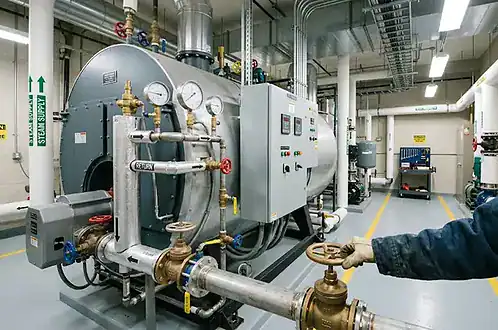
What Is a Boiler Maintenance Checklist?
A boiler maintenance checklist is a documented list of inspection, testing, cleaning, and safety-verification tasks performed on a recurring schedule to help keep a boiler operating safely and reliably. It may include daily operator checks, periodic preventive maintenance, and more detailed annual inspection and service activities. The appropriate tasks and frequency depend on the boiler type, manufacturer, operating conditions, and applicable requirements.
Boiler Components to Know Before You Start
A few components come up repeatedly in boiler maintenance because they play important roles in safe and reliable operation:
- Low-water cutoff — automatically shuts down the boiler when the water level falls below a safe operating level. Proper testing and maintenance are critical to boiler safety.
- Pressure relief valve — protects the boiler from dangerous overpressure by relieving pressure when the valve reaches its set point. Testing and inspection requirements vary by boiler type and jurisdiction.
- Heat exchanger — transfers heat from combustion gases to water or steam. Soot, scale, and deposits can restrict heat transfer and contribute to efficiency losses.
- Refractory — heat-resistant material that protects the combustion chamber and surrounding components. Cracked, damaged, or missing refractory can affect combustion performance and equipment safety.
Daily Boiler Checks — Recommended
Focus: safety controls, water level, operating conditions, and visual condition
| Task | Details |
|---|---|
| Check water level and low-water cutoff indication | Verify the boiler water level is within the normal operating range and confirm the low-water protection system shows normal operating status. Follow the manufacturer’s testing procedure for the specific boiler. |
| Record operating pressure and temperature | Establishes a baseline and helps identify abnormal readings or changes in operating conditions. |
| Inspect for visible leaks, corrosion, or unusual noise | Helps identify developing problems before they result in equipment damage or an unplanned shutdown. |
| Check flame appearance through the sight glass or viewport | An abnormal or unstable flame can indicate a combustion, fuel, or burner problem that requires investigation. |
| Verify boiler room ventilation is unobstructed | Keeps combustion-air openings and required ventilation paths clear of debris and stored materials. |
| Log fuel supply level and any alarms since the last check | Helps prevent avoidable shutdowns and ensures alarms or abnormal conditions are investigated. |
Weekly Boiler Maintenance — Recommended Tasks
Focus: safety-device checks, water treatment, blowdown, and housekeeping
| Task | Details |
|---|---|
| Test low-water cutoff according to manufacturer and jurisdictional requirements | Confirms the low-water protection system operates as intended. Testing frequency and procedure vary by boiler type and applicable requirements. |
| Blow down the boiler water on steam systems | Removes accumulated sediment and helps maintain proper boiler-water conditions. Follow the manufacturer’s blowdown procedure and frequency. |
| Check and blow down the gauge glass on steam boilers | Helps keep the water-level indication clear and reliable. Follow the manufacturer’s procedure. |
| Check water treatment chemical feed and dosing | Helps maintain water chemistry between formal water-treatment tests and reduce the potential for scale and corrosion. |
| Inspect boiler room housekeeping and clear egress | Keep access routes, combustion-air openings, and required working areas clear of stored materials and debris. |
| Check for unusual vibration in pumps and fans | Changes in vibration can indicate developing bearing, alignment, balance, or mechanical problems. |
Monthly Boiler Maintenance — Recommended Tasks
Focus: controls verification, water treatment, equipment condition, and documentation
| Task | Details |
|---|---|
| Inspect and test pressure relief valve according to applicable requirements | Verify the valve and discharge arrangement are in proper condition. Testing, adjustment, removal, or repair should follow the manufacturer’s instructions and applicable jurisdictional requirements. |
| Review boiler water treatment test results | Confirms water chemistry is being maintained within the limits established for the specific boiler and treatment program. |
| Inspect gaskets, seals, and pipe connections for leaks | Helps identify developing leaks before they result in pressure loss, water damage, or equipment problems. |
| Inspect and lubricate pumps, fans, and motors as required | Supports reliable operation while following the lubrication requirements specified by the equipment manufacturer. |
| Inspect electrical connections and wiring | Look for loose, damaged, overheated, or corroded connections that could affect controls or equipment operation. Electrical work should be performed by qualified personnel. |
| Clean burner exterior and inspect for visible wear | Helps maintain reliable burner operation between more detailed burner service intervals. |
| Document readings and findings in your CMMS | Creates a maintenance history that supports trend analysis, troubleshooting, inspections, and documentation of completed work. |
Quarterly Boiler Maintenance — Recommended Tasks
Focus: combustion testing, safety-control verification, and condition monitoring
| Task | Details |
|---|---|
| Test combustion with a calibrated combustion analyzer | Measures combustion parameters such as oxygen, carbon monoxide, carbon dioxide, and stack temperature to evaluate burner performance. Follow the manufacturer’s specifications. |
| Test safety and operating controls according to the manufacturer’s procedures | May include high-limit controls, pressure or temperature switches, low-water cutoffs, flame safeguards, and interlocks, depending on the boiler. |
| Inspect burner ignition and flame-safeguard system | Confirms ignition and flame-monitoring systems operate correctly and that fuel is shut off when a flame-failure condition occurs. |
| Check expansion tank condition on hot-water systems | Verify pressure and condition according to the manufacturer’s specifications. Improper expansion-tank operation can contribute to pressure fluctuations and relief-valve discharge. |
| Review trend data for changes in efficiency or run time | Changes in operating hours, cycles, stack temperature, or combustion readings can help identify developing equipment problems. |
Annual Boiler Inspection — Recommended Tasks
Focus: internal inspection, combustion service, safety controls, and applicable inspection requirements
| Task | Details |
|---|---|
| Inspect and clean heat-transfer and fireside surfaces | Remove soot, scale, and other deposits as appropriate to the boiler design and manufacturer’s instructions. |
| Inspect burner assembly and flame pattern | Evaluate burner condition and combustion performance and make adjustments according to the manufacturer’s specifications. |
| Inspect refractory and insulation | Look for cracking, deterioration, missing sections, or other damage that could affect combustion or equipment condition. |
| Inspect venting and flue for corrosion or blockage | Confirm combustion gases can be safely discharged and that the venting system is in appropriate condition. |
| Test carbon monoxide and combustible-gas detection systems where installed | Verify installed detection and alarm systems according to the manufacturer’s instructions and applicable requirements. |
| Inspect accessible boiler surfaces for corrosion, pitting, or scale | Identifies conditions that may require further inspection, cleaning, thickness testing, or repair by qualified personnel. |
| Perform non-destructive testing where required or recommended | Methods such as ultrasonic thickness testing may be used by qualified personnel to evaluate suspected wall thinning or other conditions. |
| Verify applicable jurisdictional and insurance inspection requirements | Inspection frequency, certification, and documentation requirements vary by jurisdiction, boiler type, and insurance policy. |
| Update maintenance records and schedule the next required inspection | Maintains an auditable record of inspections, repairs, testing, and required follow-up work. |
Using Maintenance History to Get Ahead of Boiler Failures
A single inspection tells you the boiler’s condition today. A maintenance history tells you where it’s headed. Tracking readings such as stack temperature, combustion measurements, run hours, and cycle counts over time in a CMMS can help maintenance teams identify gradual changes before they become an unexpected shutdown, allowing more work to be planned in advance.
Steam vs. Hot Water Boilers: What Changes
The core maintenance program applies to both systems, but the specific tasks differ. Steam boilers may require additional activities such as regular blowdown, gauge-glass maintenance, low-water cutoff testing, and inspection of steam traps and condensate-return equipment. Hot-water boilers place greater emphasis on system pressure, expansion-tank condition, circulator performance, and low-water protection.
The appropriate procedure and frequency depend on the boiler design, manufacturer, operating conditions, and applicable jurisdictional requirements. Always follow the specific maintenance instructions for your boiler.
How eWorkOrders CMMS Supports Boiler Maintenance
Boiler maintenance carries important safety and compliance considerations, which makes documentation as important as the maintenance work itself. eWorkOrders lets facility teams build recurring boiler PM schedules by calendar or meter reading, assign routine checks to appropriate personnel, and keep a complete maintenance history of inspections, readings, repairs, and completed work in one place. This documentation can help maintenance teams prepare for inspections, troubleshoot recurring problems, and maintain organized service records.
Frequently Asked Questions
How often should a commercial boiler be serviced?
The appropriate service frequency depends on the boiler type, manufacturer, operating conditions, and applicable jurisdictional requirements. Daily operator checks may include water level, pressure, temperature, alarms, and visible condition. More detailed preventive maintenance and inspections should be performed at intervals established by the manufacturer, qualified service personnel, and applicable regulations.
What’s included in a boiler preventive maintenance checklist?
A boiler preventive maintenance checklist may include water-level checks, low-water protection, pressure and temperature readings, water-treatment monitoring, combustion testing, safety-control verification, burner and heat-transfer-surface inspection, venting checks, and maintenance documentation. The specific tasks and frequency should be based on the boiler manufacturer’s requirements and applicable regulations.
Who should perform boiler maintenance?
Trained facility personnel may perform routine operator checks when permitted by the equipment manufacturer and facility procedures. Combustion testing, internal inspection, safety-control testing, pressure-relief work, and other specialized tasks should be performed by qualified personnel in accordance with the manufacturer’s instructions and applicable jurisdictional requirements.
What happens if a boiler isn’t maintained?
Neglected boilers can develop scale, soot, corrosion, combustion problems, water-treatment issues, and component wear. These conditions can contribute to reduced heat transfer, unplanned shutdowns, equipment damage, and potentially serious safety problems. Regular preventive maintenance helps identify developing conditions before they become larger failures.
How much does boiler maintenance cost?
Boiler maintenance costs vary significantly based on boiler size, type, fuel source, age, condition, number of units, service requirements, and local labor rates. Inspection and service requirements can also vary by jurisdiction and equipment manufacturer. A qualified boiler service provider can determine the appropriate scope and provide a site-specific estimate.
What is the difference between maintaining a steam boiler and a hot water boiler?
Steam boilers may require additional maintenance such as boiler blowdown, gauge-glass maintenance, low-water cutoff testing, and steam-trap inspection. Hot-water boilers focus more on system pressure, expansion-tank condition, circulator performance, and low-water protection. Both require maintenance based on the manufacturer’s instructions and applicable requirements.
Disclaimer: This boiler maintenance checklist is provided as a general reference and recommended starting point for commercial and industrial maintenance programs. It is not a universal maintenance schedule and does not replace the equipment manufacturer’s operation and maintenance manual, instructions from qualified service personnel, requirements of your insurance carrier, or applicable federal, state, and local laws, codes, and regulations. Boiler maintenance, inspection, testing, and repair requirements vary by boiler type, fuel, installation, jurisdiction, and operating conditions. Always follow the manufacturer’s requirements and have safety-critical work performed by qualified personnel as required by the manufacturer or applicable regulations. eWorkOrders does not represent that every task or frequency listed applies to every boiler.
By Janet Jaquis, Marketing Director | CMMS Software Specialist · Last updated September 9, 2026
Additional Resources
Part of the eWorkOrders Learning Center
The Ultimate Library of Maintenance Checklists
Commercial HVAC Maintenance Checklist


