What Is Inventory Management? A Complete Guide
Inventory management is the process of tracking, storing, ordering, and controlling stock so the right items are available when needed, without tying up more money than necessary. This guide explains how it works, the main types and methods, how maintenance (MRO) inventory differs from production inventory, and where to go deeper on each topic.
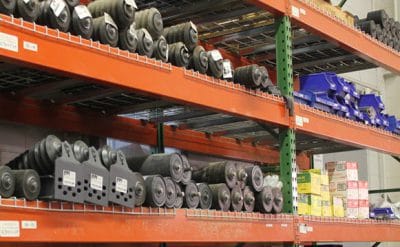
What Is Inventory Management?
Inventory management covers everything a business does to know what stock it has, where it is, how much it’s worth, and when to order more. The goal is a balance: enough stock to keep work moving, but not so much that money sits on shelves, parts go obsolete, or storage space runs out.
Every inventory system answers the same four questions: What do we have? Where is it? When should we reorder? How much should we order? The methods below are different ways of answering those questions reliably.
Types of Inventory
| Type | What It Is | Example |
|---|---|---|
| Raw materials | Materials that will become part of a product | Steel coil, resin, flour |
| Work in progress (WIP) | Partly finished products | Assemblies waiting for the next step |
| Finished goods | Products ready to sell | Packaged products in a warehouse |
| MRO inventory | Maintenance, repair, and operations supplies used to keep equipment and facilities running; never sold | Bearings, belts, filters, motors, lubricants |
How Maintenance (MRO) Inventory Is Different
Most inventory advice is written for products that get sold. Maintenance inventory follows different rules, and applying production rules to it causes real problems.
| Production Inventory | MRO Inventory | |
|---|---|---|
| Demand | Driven by sales and production schedules, fairly predictable | Driven by equipment failures and maintenance schedules, often irregular |
| Cost of running out | A delayed order | Equipment downtime, which can stop production |
| Slow-moving stock | Usually a problem to clear | Often deliberate: critical spares may sit for years |
| Number of items | Fewer items, high volumes | Many different items, low volumes each |
| Tracked against | Orders and products | Work orders and the assets parts are used on |
That’s why maintenance teams need methods built for irregular demand and downtime risk, which is what most of the guides linked below focus on.
Key Components of Inventory Management
1. Tracking
Knowing what’s on hand at all times, usually with a perpetual inventory system that updates with every transaction. Barcode scanning and RFID tags reduce manual entry errors, and cycle counting confirms the records match the shelves.
2. Forecasting Demand
Estimating what you’ll need. For products, that’s based on sales history and seasonality. For maintenance parts, it’s based on part usage history, preventive maintenance schedules, and equipment failure history.
3. Replenishment
Deciding when and how much to reorder, using tools like reorder points and min/max levels, safety stock, and economic order quantity (explained below).
4. Storage and Organization
Giving every item one known location, organizing for fast retrieval, and controlling access. The MRO storeroom best practices guide covers this in detail for maintenance teams.
5. Valuation
Putting a dollar value on inventory for financial reporting. The three common methods:
- FIFO (first in, first out): assumes the oldest stock is used first. It matches how most physical stock actually moves.
- LIFO (last in, first out): assumes the newest stock is used first. It’s permitted under U.S. accounting rules but not under international (IFRS) standards.
- Weighted average cost: values every unit at the average cost of all units on hand, which smooths out price changes. It’s a practical fit for maintenance parts bought repeatedly at varying prices.
Your finance team decides which method applies; it affects reported costs, not how the storeroom operates.
6. Linking Parts to Equipment (Bill of Materials)
A maintenance bill of materials (BOM) lists the spare parts that belong to each piece of equipment: the bearings, belts, seals, filters, and motors that keep it running. It answers the question a technician asks during a breakdown: “What parts does this machine use, and do we have them?”
- Faster repairs. Technicians find the right part number from the equipment record instead of searching manuals or guessing.
- Smarter stocking. You can see which spares support critical equipment, and which parts are shared across several machines.
- Cleaner inventory. When equipment is retired, its BOM shows exactly which parts may now be obsolete.
Start with your most critical equipment and build out from there, using the manufacturer’s parts list and your own work order history.
7. Standard Procedures
Written procedures keep inventory work consistent no matter who’s on shift. At a minimum, document how parts are received, issued, returned, counted, and added as new items, plus who can approve orders and adjustments. Short, clear procedures that people actually follow beat long manuals no one reads.
Inventory Management Methods
ABC Analysis
Ranks items into three classes by annual value: A items are the few that make up most of the value, B items are the middle group, and C items are the many low-value items. Each class gets a different level of control. For maintenance, many teams also move parts for critical equipment into the A class regardless of price.
Reorder Points and Min/Max Levels
Sets the quantity that triggers a new order (the minimum or reorder point) and the most you want on hand (the maximum). This is the most common replenishment method for maintenance parts. See Min/Max Stock Levels and Reorder Points for the formula and an example.
Economic Order Quantity (EOQ)
EOQ calculates the order size that keeps the combined cost of ordering and holding stock as low as possible:
| Term | Meaning |
|---|---|
| EOQ | √(2 × D × S ÷ H) |
| D | Annual usage in units |
| S | Cost to place one order |
| H | Cost to hold one unit for a year |
For example: a filter used 1,200 times a year, with a $50 ordering cost and a $4 yearly holding cost per unit, has an EOQ of √(2 × 1,200 × 50 ÷ 4) = √30,000 ≈ 173 units per order. EOQ works best for steady-use items like filters and lubricants. It’s less useful for parts with irregular demand.
Just-in-Time (JIT)
Orders stock only as it’s needed, to keep inventory low. It works well for predictable production materials, but it’s risky for maintenance: when a machine breaks, there’s no time to wait for delivery. Most maintenance teams use JIT only for low-risk, easy-to-get items.
Vendor-Managed Inventory (VMI)
The supplier monitors your stock and restocks it, often for high-volume consumables like fasteners and gloves. It saves time, but you still need to watch what you’re paying for and what’s actually used.
Kitting
Pulling all the parts for a planned job into one labeled kit ahead of time. It’s common for preventive maintenance and shutdowns, and it cuts technician trips to the storeroom.
Benefits of Good Inventory Management
- Less downtime. Parts are on hand when equipment fails, instead of on a truck.
- Lower carrying costs. Less money tied up in excess and obsolete stock.
- Fewer emergency orders. Rush shipping and premium prices become the exception.
- Accurate records. The system can be trusted, so people stop keeping their own hidden stashes.
- Better decisions. Usage and cost data show what to stock, what to cut, and which suppliers perform.
Common Inventory Management Challenges
- Stock-outs and overstock at the same time. Too much of some parts and not enough of others is the most common sign that stocking rules aren’t set or followed.
- Inaccurate records. Unrecorded issues, receiving errors, and duplicate part records make the system unreliable.
- Obsolete stock. Parts for equipment that’s been retired or replaced.
- Irregular demand. Failure-driven usage is hard to forecast, which is why reorder points need regular review.
- Supply delays. Long or unpredictable lead times push up safety stock.
- Shrinkage. Parts that leave the storeroom without being recorded.
How to Measure Inventory Performance
A few KPIs show whether inventory management is working:
| KPI | Formula |
|---|---|
| Stock-Out Rate | (Work orders delayed by a missing part ÷ Work orders that needed parts) × 100 |
| Inventory Record Accuracy | (Counts matching the record ÷ Total counts) × 100 |
| Inventory Turns | Annual value of parts issued ÷ Average inventory value |
| Carrying Cost | Average inventory value × Annual carrying cost rate |
For all 12 metrics with worked examples, see Spare Parts Inventory KPIs.
How a CMMS Supports Inventory Management
For maintenance teams, a CMMS connects inventory to the work it supports.
Parts tied to work orders and assets. Every part issued is recorded against the job and the equipment, which builds usage and cost history.
Reorder alerts. When stock reaches its minimum, the right person is notified before the shelf is empty.
One record per part. Descriptions, locations, vendors, and stocking levels live in one system instead of spreadsheets.
Reporting. Usage, cost, and inventory reports show what’s working and what isn’t.
Inventory Management Guides
Go deeper on each part of maintenance inventory management:
How a CMMS tracks parts, stock levels, and reorders in one system.
Layout, bin locations, receiving, issuing, security, and a 12-point self-audit.
The reorder point formula with a worked example.
ABC count schedules, blind counts, and measuring record accuracy.
How to identify, score, and protect the parts you can’t wait for.
Repair-or-replace decisions and how many spares to keep in rotation.
12 metrics with formulas: stock-outs, turns, carrying cost, and more.
Managing the full spare parts lifecycle, with a fleet example.
Step-by-step inventory control, from setup to ongoing review.
The top 10 benefits of managing spare parts well.
Inventory systems and methods in practice.
Faster, more accurate issuing and counting.
A printable checklist of storeroom tasks.
Frequently Asked Questions
What is inventory management in simple terms?
Inventory management is knowing what stock you have, where it is, and when to order more, so you have what you need without tying up extra money in items sitting on shelves.
What is MRO inventory?
MRO inventory is the maintenance, repair, and operations supplies used to keep equipment and facilities running, such as spare parts, lubricants, filters, and tools. Unlike raw materials or finished goods, it’s never sold.
What are the main inventory management methods?
The most common are ABC analysis, reorder points with min/max levels, economic order quantity (EOQ), just-in-time (JIT), vendor-managed inventory (VMI), and kitting. Maintenance teams rely most on min/max levels, ABC analysis, and cycle counting.
Why doesn’t just-in-time work well for maintenance parts?
JIT depends on predictable demand. Maintenance demand is driven by equipment failures, which are irregular, and running out means downtime. That’s why critical spares are usually stocked even when they’re rarely used.
What is a bill of materials in maintenance?
A maintenance bill of materials (BOM) is a list of the spare parts that belong to a specific piece of equipment. It helps technicians find the right part quickly during a repair and helps planners decide which spares to stock.
What’s the difference between FIFO, LIFO, and weighted average cost?
They’re ways of valuing inventory. FIFO assumes the oldest stock is used first, LIFO assumes the newest is used first, and weighted average values every unit at the average cost. The choice affects financial reports, not how the storeroom runs.
Conclusion
Inventory management comes down to four questions: what you have, where it is, when to reorder, and how much. For maintenance teams, the answers have to account for irregular, failure-driven demand and the high cost of downtime. Start with accurate records, set stocking rules for every part, protect critical spares, and measure the results. The guides above cover each step in detail.
Put Your Maintenance Inventory in One Place
Inventory management works when every part, location, and transaction is recorded in one system. That’s the job of spare parts and inventory management in a CMMS. eWorkOrders has supported maintenance operations for over 30 years, serving teams at Honda and King River Packaging, rated 4.9 on Capterra and G2.
About the author: Janet Jaquis is Marketing Director at eWorkOrders, where she writes about maintenance strategy, asset reliability, and CMMS software for maintenance and facility teams.


