Forklift Preventive Maintenance: PM Intervals & Service Guide
How to run a forklift preventive maintenance program: what to service at 250, 500, and 1,000 hours, what a technician’s service visit covers, how electric and IC trucks differ, and how to track it all without losing a clipboard.
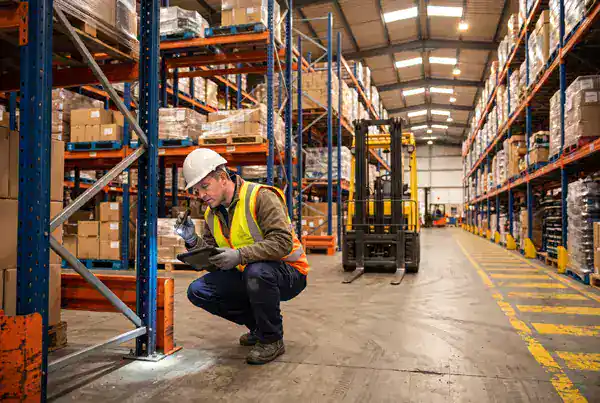
What Is Forklift Preventive Maintenance?
Forklift preventive maintenance (PM) is the scheduled service work — lubrication, fluid and filter changes, adjustments, and part replacement — that a technician performs at set operating-hour or calendar intervals so wear items are serviced before they fail. It is different from the operator’s daily inspection, which is a quick pass/fail safety check before each shift.
A complete program uses both. The daily inspection confirms the truck is safe to run today; preventive maintenance keeps it running next month. For the shift-by-shift inspection points, use our printable forklift maintenance checklist.
Inspection vs. PM: an inspection asks “is it safe to run?” A PM service asks “what needs to be adjusted, lubricated, or replaced to keep it running?”
Forklift PM Schedule by Operating Hours
Most fleets run PM off the hour meter rather than the calendar, because a truck that runs two shifts wears twice as fast as one that sits idle. A common cadence is 250, 500, and 1,000 hours, though your OEM’s service manual sets the exact intervals and specs for your model.
| Interval | Preventive maintenance tasks |
|---|---|
| Pre-shift / daily | Operator inspection (see the checklist); top off fluids; grease per OEM points; clear debris from radiator/battery compartment |
| Every 250 hours | Change engine oil and filter (IC); check/add battery water (electric); lubricate mast, carriage, and lift chains; inspect drive belts and hoses; check hydraulic fluid level; adjust brakes; inspect tires and forks |
| Every 500 hours | Replace fuel filter and clean air filter (IC); test battery cells and clean terminals (electric); inspect lift chains for stretch and anchor wear; check transmission/differential fluid; inspect wheel bearings; inspect steering and hydraulic cylinders for leaks |
| Every 1,000 hours (≈ annual) | Replace hydraulic fluid and filter; change transmission fluid; flush coolant; replace spark plugs and set ignition timing (IC); full brake-system inspection; inspect frame and overhead guard welds; load test with documented results |
Hour intervals are a starting point. A truck in a cold, wet, or high-dust environment needs tighter cycles, and your manufacturer’s schedule always governs.
Forklift Service Checklist
A forklift service checklist is the technician-level list of repair and replacement tasks performed during a scheduled service. A standard service visit covers:
Lubrication
Grease all OEM fittings; lubricate lift chains, mast channels, and carriage rollers.
Fluids and filters
Engine oil, hydraulic fluid, transmission fluid, coolant; oil, fuel, and air filters per interval.
Lift system
Measure lift chains for stretch, check anchors and sheaves, inspect cylinders and hoses for leaks, verify lift/lower/tilt speeds.
Brakes and steering
Adjust service and parking brakes, check linings and fluid, inspect steering linkage and tie rods.
Electrical / battery
Test battery and charger (electric), check cables and connectors, inspect lights, horn, alarm, and gauges.
Power unit
Belts, hoses, ignition, timing, and emissions on IC trucks; motor and controller checks on electric trucks.
Structure and tires
Inspect forks, overhead guard, backrest, frame welds, and tire wear; rotate or replace tires as needed.
Documentation
Record readings, parts used, and the next-service due hour in the truck’s maintenance history.
Electric vs. Internal-Combustion (IC) Forklifts: What Changes
The core service program is the same for both, but the power system adds different tasks. Electric forklifts shift the focus to the battery and charging system; IC trucks — LPG, diesel, or gasoline — add engine, fuel, and emissions items.
| Area | Electric forklift | IC forklift (LPG / diesel / gas) |
|---|---|---|
| Power source | Battery charge, specific gravity, water level, connectors, restraint, case | Engine oil, coolant, air/fuel filters, belts, ignition/glow plugs |
| Fuel / charging | Charger operation, cables, charge cycles, ventilation during charging | Fuel/LPG tank, lines, fittings, fuel cap, leak checks |
| Emissions | None (zero tailpipe emissions) | Exhaust condition, smoke color, CO monitoring in enclosed areas |
| Fluids | Fewer fluids — mainly hydraulic and brake | Engine oil, transmission, coolant, hydraulic, brake |
Electric trucks mean fewer fluids and engine tasks, but battery care is critical — proper watering, equalizing, and charging practices drive battery life. LPG units require careful handling of the tank and fittings.
Using an Excel Forklift PM Template
Many facilities start forklift PM in Excel or Google Sheets. An effective template uses one row per task and columns for pass/fail, the hour-meter reading, the technician, the date, and a corrective-action flag — with one tab for each PM interval.
Spreadsheets work at first, but they have real limits at fleet scale: they don’t remind you when a PM is due, don’t timestamp who did the work, don’t attach photos of a defect, and don’t turn a failed item into a tracked repair. That is the point where teams move the program into a CMMS.
How eWorkOrders Runs Forklift Preventive Maintenance
eWorkOrders turns your forklift PM program from paper into scheduled, tracked work. Every truck gets its own record, every service is released when it’s due, and every finding becomes a work order instead of a note on a clipboard.
- Meter-based PM. eWorkOrders supports engine-hour meters and automatically releases the 250/500/1,000-hour PM work orders when each truck reaches its interval, through its preventive maintenance system.
- Mobile inspections. Operators and technicians complete customizable inspection checklists from a mobile device.
- Failures become work orders. A failed inspection item or a technician finding becomes a work order routed to the right tech, with parts and labor tracked to close.
- Full truck history. Every PM and repair logs to the truck’s asset record — hours, cost, downtime, and parts — supporting warranty claims and repair-vs-replace decisions.
- Condition monitoring. eWorkOrders integrates with condition-monitoring partners such as AssetWatch, whose sensors can automatically generate a work order inside eWorkOrders when a reading crosses a threshold.
Keep Every Forklift on the Floor, Not in the Shop
See how eWorkOrders helps your maintenance team schedule preventive maintenance, track inspections, and turn problems into work orders before small issues become costly downtime.
See how it works in a free, personalized demo.
Frequently Asked Questions
How often should a forklift get preventive maintenance?
Most fleets service forklifts by operating hours — a common cadence is every 250, 500, and 1,000 hours — following the manufacturer’s service schedule, on top of the operator’s daily pre-shift inspection and an annual certified inspection and load test.
What is the difference between a forklift inspection and preventive maintenance?
An inspection is a pass/fail safety check, mostly done daily by the operator, that confirms the truck is safe to run and tags it out if not. Preventive maintenance is the scheduled service work — lubrication, fluid and filter changes, adjustments, and part replacement — done by a technician at set hour or calendar intervals.
What’s on a forklift service checklist?
A technician’s service checklist covers lubrication, fluids and filters, the lift system (chains, cylinders, hoses), brakes and steering, the battery or engine, structure and tires, and documentation of readings, parts used, and the next-service due hour.
How does electric forklift maintenance differ from IC forklift maintenance?
Electric forklifts focus on the battery and charging system — charge level, water, connectors, and charger — with fewer fluids and no emissions tasks. Internal-combustion (LPG, diesel, gas) trucks add engine oil and coolant, fuel system and filter checks, and exhaust and emissions inspections.
Related Resources
- Forklift Maintenance Checklist (printable)
- Common Forklift Problems & How To Avoid Them
- Forklift Accidents – How To Avoid Them
- Warehousing & Distribution CMMS
- The Ultimate Library of Maintenance Checklists
Disclaimer: Service intervals and tasks on this page are general guidance. Always follow your forklift manufacturer’s service manual for your specific model, and consult OSHA’s current standards or a qualified technician to confirm your requirements.
About the author: Janet Jaquis is a CMMS software specialist with over 8 years at eWorkOrders, where she develops educational content, technical guides, whitepapers, and implementation resources for maintenance management professionals.


