The Maintenance Technician: Role, Duties & Job Description
A maintenance technician is the hands-on professional who keeps equipment, machinery, and buildings running — inspecting, repairing, and servicing assets so the operation doesn’t stop.
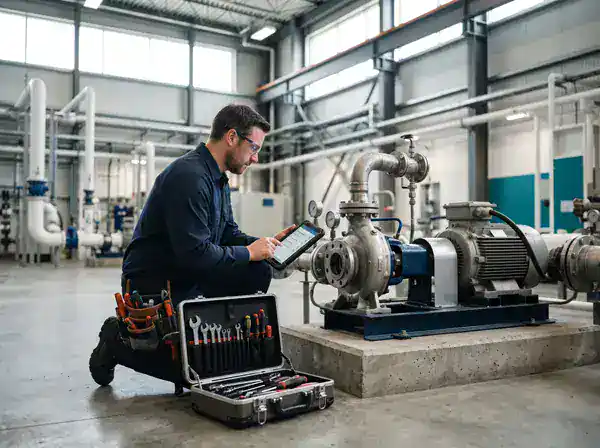
What Is a Maintenance Technician?
A maintenance technician is a skilled tradesperson responsible for inspecting, repairing, and maintaining equipment, machinery, building systems, and facilities so they operate safely and reliably. They are the people who actually turn the wrench — diagnosing why a machine stopped, replacing worn components, performing scheduled preventive maintenance, and responding to breakdowns across mechanical, electrical, plumbing, and HVAC systems.
You’ll find maintenance technicians in nearly every sector that depends on physical assets: manufacturing plants, warehouses and distribution centers, hospitals, schools and universities, apartment and commercial buildings, hotels, food and beverage facilities, and municipal operations. Job titles vary — industrial maintenance technician, facilities maintenance technician, building maintenance technician, mechanical maintenance technician — but the core function is the same: keep the assets running and the environment safe.
The role sits at the execution end of the maintenance operation. Where a facilities or maintenance leader plans and prioritizes the work, the technician is the one who completes it, documents what was found and fixed, and feeds that information back so the next failure can be prevented.
Types of Maintenance Technicians
The core job is the same everywhere, but the equipment, the setting, and the skills that matter most change with the type of operation.
| Type | Where they work | Typical focus |
|---|---|---|
| Industrial (plant) maintenance technician | Manufacturing plants, food and beverage, packaging, processing | Production equipment, motors, conveyors, hydraulics, pneumatics, PLCs and drives |
| Facilities maintenance technician | Hospitals, schools, offices, campuses, data centers | HVAC, electrical, plumbing, life-safety systems, and building equipment |
| Building or property maintenance technician | Apartment communities, commercial and residential property | Unit turns, tenant service requests, appliances, plumbing, and general repairs |
| HVAC/R maintenance technician | Facilities, commercial buildings, cold storage | Heating, cooling, and refrigeration systems; requires EPA 608 for refrigerant work |
| Public works / municipal maintenance technician | Cities, counties, utilities, water and wastewater plants | Pumps, lift stations, vehicles, parks, streets, and public facilities |
What Does a Maintenance Technician Do? Core Responsibilities & Daily Tasks
A maintenance technician’s core job is to keep assets available by performing both planned maintenance and unplanned repairs. The day is a mix of scheduled preventive work, reactive breakdown response, inspections, and documentation. The table below breaks down the responsibilities that show up in almost every maintenance technician role.
| Responsibility | What It Involves | Why It Matters |
|---|---|---|
| Preventive maintenance | Performing scheduled inspections, lubrication, calibration, filter and belt changes, and component replacements before failure | Prevents unplanned downtime and extends asset life |
| Repairs & troubleshooting | Diagnosing faults and repairing mechanical, electrical, hydraulic, pneumatic, HVAC, and plumbing systems | Restores downed equipment quickly and safely |
| Inspections | Walking routes, reading gauges and meters, checking for leaks, wear, vibration, and safety hazards | Catches small problems before they become failures |
| Installation & setup | Installing, assembling, and commissioning new equipment and building systems | Gets new assets online correctly the first time |
| Work order documentation | Recording what was inspected, what failed, parts used, and labor time against each asset | Builds the asset history that drives better decisions |
| Parts & inventory | Pulling spare parts, flagging low stock, and noting what was consumed on a job | Keeps the right parts on hand and controls carrying cost |
| Safety & compliance | Following lockout/tagout, PPE, and code requirements; documenting safety-critical work | Protects people and keeps the site audit-ready |
A typical day starts with checking assigned work orders — the overnight breakdowns and the PMs due today — then moving through them by priority. Reactive repairs interrupt the plan when something critical goes down, which is why the best technicians are equally comfortable executing a planned service and troubleshooting a failure under pressure. Every job ends the same way: closing out the work order with what was found, what was done, and what parts were used.
The difference between a reactive shop and a reliable one often shows up in the technician’s day. When most hours go to scheduled, planned work instead of emergency repairs, failures get rarer, parts are on hand before they’re needed, and the whole team spends less time firefighting.
Skills & Qualifications
A maintenance technician needs a blend of hands-on technical ability, systematic troubleshooting skill, and the discipline to document work accurately. Most roles are built on practical trade knowledge rather than a four-year degree, though the mix depends on the industry and the complexity of the equipment.
Technical Skills
- Mechanical aptitude — understanding bearings, belts, gearboxes, pumps, motors, and conveyors well enough to diagnose and repair them.
- Electrical knowledge — reading schematics, using a multimeter, and working safely on control circuits, motors, and (in industrial roles) PLCs and variable-frequency drives.
- Building systems — HVAC, plumbing, and basic carpentry for facilities and building maintenance roles.
- Troubleshooting — a methodical approach to isolating a fault instead of swapping parts until something works.
- Tool and instrument use — hand and power tools, welding, and diagnostic instruments such as vibration and thermal readers.
Soft Skills and Qualifications
- Problem-solving under pressure — staying calm and systematic when a critical asset is down and production is watching.
- Documentation discipline — recording findings and labor accurately, because the asset history is only as good as what the technician logs.
- Communication — explaining a fault and a fix clearly to supervisors, operators, and vendors.
- Physical requirements — the ability to lift, climb, stand for long periods, and work in tight or elevated spaces.
- Baseline credentials — a high school diploma or GED is the common minimum, often paired with a vocational/technical certificate, an apprenticeship, or an associate degree in industrial maintenance, mechatronics, or a trade.
Copy-Ready Maintenance Technician Job Description
Use the description below as a starting point for your own posting — swap in your company details, adjust the requirements to your equipment and facility type, and add your pay range and benefits.
Job Title: Maintenance Technician
Reports to: Maintenance Supervisor / Maintenance Manager
Location: [City, State] · Type: Full-time (shift and on-call requirements vary)
Job Summary
We are seeking a skilled Maintenance Technician to inspect, repair, and maintain our equipment, machinery, and facilities. You will perform preventive maintenance, troubleshoot and repair breakdowns, and document your work so our assets stay safe, reliable, and available. The ideal candidate is a hands-on problem-solver comfortable with mechanical, electrical, and building systems.
Key Responsibilities
- Perform scheduled preventive maintenance on equipment, machinery, and building systems
- Diagnose and repair mechanical, electrical, hydraulic, pneumatic, HVAC, and plumbing faults
- Respond to breakdowns and emergency repairs to minimize downtime
- Conduct routine inspections and report developing issues before they cause failures
- Install, assemble, and commission new equipment and systems
- Complete and close work orders with findings, parts used, and labor time
- Follow all safety procedures, including lockout/tagout and PPE requirements
- Maintain spare-parts inventory and flag items that need reordering
Requirements
- High school diploma or GED; vocational/technical training, apprenticeship, or associate degree in industrial maintenance or a trade preferred
- [X]+ years of maintenance, repair, or related hands-on experience
- Working knowledge of mechanical and electrical systems and the ability to read schematics
- Familiarity with a CMMS / work-order management system
- Ability to lift [X] lbs, climb, and work in tight or elevated spaces
- Relevant certification (EPA 608, OSHA 10/30, NCCER, trade license, or CMRT) a plus
Skills
- Strong mechanical and electrical troubleshooting ability
- Methodical, safety-first approach to diagnosis and repair
- Accurate documentation and communication
- Dependability and the flexibility to handle shifting priorities
Tips for Writing an Effective Maintenance Technician Job Description
- Name the equipment and systems. “Maintain packaging lines, air compressors, and rooftop HVAC units” attracts the right candidates far better than “maintain equipment.”
- Post the pay range. Skilled technicians compare offers, and a clear range helps the right candidates decide to apply.
- Be upfront about shifts and on-call. Nights, weekends, and call-in expectations are deal-breakers for some candidates; say so in the posting.
- Separate must-haves from nice-to-haves. Require only what the job truly needs, and list certifications you’ll help pay for as a plus rather than a requirement.
- Describe the tools. Technicians want to know whether they’ll work from paper or a mobile CMMS, and what diagnostic tools are provided.
- Show the growth path. Mention training support and the route to lead technician, planner, or supervisor.
Certifications & Training Paths
Most maintenance technicians build their careers through a combination of vocational training, on-the-job apprenticeship, and stackable certifications rather than a single credential. The right certifications depend on the industry and the equipment, but a handful are widely recognized across maintenance roles.
| Credential | Issuing Body / Area | Where It Applies |
|---|---|---|
| EPA Section 608 | U.S. EPA — refrigerant handling | Required to service HVAC/R equipment that contains refrigerant |
| OSHA 10 / OSHA 30 | OSHA-authorized safety training | General workplace and construction safety; often expected across industrial roles |
| NCCER credentials | National Center for Construction Education & Research | Industrial maintenance, electrical, millwright, and HVAC craft training |
| CMRT | SMRP — Certified Maintenance & Reliability Technician | Recognizes maintenance and reliability skills for technicians |
| Trade licenses | State electrical, plumbing, HVAC, or boiler-operator licenses | Legally required for certain electrical, plumbing, and pressure-vessel work |
| Manufacturer / OEM certs | Equipment and controls makers (e.g., PLC and drive platforms) | Validates skill on specific automation, controls, or machinery |
| Welding certification | AWS and similar bodies | Fabrication and repair work in industrial maintenance |
A common path is to start with a high school diploma or GED, complete a vocational program or a registered apprenticeship, earn safety and refrigerant certifications early, then add reliability credentials such as CMRT and manufacturer-specific certifications as the technician specializes. Many move up into a lead technician, planner, or supervisor role over time — and the technicians who document their work well in a CMMS are often the ones who build the track record to get there.
Maintenance Technician Salary and Job Outlook
The U.S. Bureau of Labor Statistics (BLS) tracks maintenance technicians under the occupation “general maintenance and repair workers.” The national median annual pay was $49,590 in May 2025, or $23.84 per hour. Technicians with electrical, controls, HVAC/R, or industrial equipment skills typically earn toward the higher end.
| Measure | BLS figure (national) |
|---|---|
| Median annual pay | $49,590 (May 2025) |
| Median hourly pay | $23.84 |
| Lowest 10 percent | Less than $35,350 |
| Highest 10 percent | More than $77,180 |
| Number of jobs | 1,621,800 (2025) |
| Projected job growth | 4% (2025–35) |
| Openings per year | About 148,700, on average, over the decade |
| Typical entry-level education | High school diploma or equivalent |
Median Pay by Industry
| Industry | Median annual pay (May 2025) |
|---|---|
| Manufacturing | $61,500 |
| Government (excluding schools and hospitals) | $51,160 |
| Educational services | $50,270 |
| Real estate and rental and leasing | $48,360 |
| Accommodation and food services | $39,590 |
Pay varies by location. These are national figures. Actual pay differs significantly by state and metro area, cost of living, industry, shift, union status, experience, and certifications. Check state and local wage data before setting or comparing pay.
Many openings come from experienced technicians retiring or moving into lead and supervisor roles. Source: BLS Occupational Outlook Handbook. For how technician pay compares with the roles above it, see highest-paying maintenance jobs and salaries.
Maintenance Technician vs. Maintenance Supervisor
A maintenance technician executes the hands-on work, while a maintenance supervisor leads the technicians and makes sure the assigned work gets done correctly and on time. The technician’s focus is the asset in front of them; the supervisor’s focus is the team, the schedule, and the day’s priorities. The supervisor role is usually the first step up from the bench.
| Maintenance Technician | Maintenance Supervisor | |
|---|---|---|
| Primary focus | Performing inspections, repairs, and preventive maintenance | Leading technicians and keeping the daily plan on track |
| Scope | Individual assets and assigned work orders | The technician team and the work queue |
| Key skills | Technical troubleshooting and repair | Scheduling, prioritizing, coaching, and reporting |
| Decisions | How to diagnose and fix the job at hand | Who works what, in what order, and whether it’s done right |
| Reports to | Maintenance supervisor | Maintenance or facilities manager |
Above the supervisor sits the manager, who owns budget, strategy, and department KPIs. If you’re mapping out the full chain of command or hiring for the roles above the bench, our maintenance manager job description and facilities manager job description break down the leadership side of the maintenance organization.
How a CMMS Makes a Maintenance Technician’s Job Easier
A CMMS (computerized maintenance management system) gives technicians their work orders, PM schedules, asset history, and parts in one place — usually on a phone or tablet right at the asset. Instead of chasing paper work orders, hunting for a manual, or guessing what was done last time, the technician has everything needed to complete the job and log it in seconds.
- Mobile work orders — technicians receive, update, and close work orders from the floor, attaching photos, notes, and labor time without walking back to a desk.
- PM schedules — preventive maintenance is generated and assigned automatically, so scheduled work doesn’t slip through the cracks and nobody tracks due dates on a whiteboard.
- Asset history — scanning an asset pulls up its full maintenance history, manuals, and past repairs, so the technician starts troubleshooting with context instead of from zero.
- Parts and inventory — the technician can see what’s in stock, reserve parts to a job, and trigger a reorder when stock runs low.
- Less paperwork, better data — because logging happens at the point of work, the asset history stays accurate, which makes the next repair faster and the whole operation more reliable.
The payoff compounds. Condition-monitoring partners such as AssetWatch can even auto-generate a work order inside eWorkOrders the moment a sensor detects a developing fault — so the technician is dispatched to the right asset with the right task before it fails, not after.
Equip Your Technicians With the Right Tools
eWorkOrders puts work orders, PM schedules, asset history, and parts in your technicians’ hands on any device — so they spend their time fixing assets, not chasing paperwork.
Frequently Asked Questions
What does a maintenance technician do?
A maintenance technician inspects, repairs, and maintains equipment, machinery, and building systems so they run safely and reliably. The job combines scheduled preventive maintenance with troubleshooting and repairing breakdowns across mechanical, electrical, HVAC, and plumbing systems, and documenting each job in a work order.
What qualifications do you need to be a maintenance technician?
Most roles require a high school diploma or GED plus hands-on technical skill, often gained through a vocational program, a registered apprenticeship, or an associate degree in industrial maintenance or a trade. Mechanical and electrical troubleshooting ability and certifications such as EPA 608, OSHA 10/30, or a trade license strengthen a candidate.
What is the difference between a maintenance technician and a maintenance worker?
The titles are often used interchangeably. “Maintenance technician” usually implies stronger diagnostic skills across several systems, such as electrical controls, HVAC, and industrial equipment, while “maintenance worker” can also describe more general building upkeep and repair.
What is the difference between a maintenance technician and a maintenance supervisor?
A maintenance technician performs the hands-on inspections, repairs, and preventive maintenance, while a maintenance supervisor leads the technician team, assigns and prioritizes the work, and makes sure it’s completed correctly and on time. The supervisor role is typically the next step up from a technician.
How does a CMMS help a maintenance technician?
A CMMS gives technicians their work orders, PM schedules, asset history, and spare-parts information in one place, usually on a mobile device at the asset. That means less time chasing paperwork and looking up records, faster troubleshooting with full asset history, and accurate logging that keeps the whole maintenance operation reliable.
About the author: Janet Jaquis is Marketing Director at eWorkOrders and a CMMS software specialist with over 8 years at the company. She develops educational content, technical guides, and implementation resources for maintenance management professionals across manufacturing, healthcare, government, food and beverage, and facilities operations.
Disclaimer: Salary and job outlook figures are national estimates from the U.S. Bureau of Labor Statistics (May 2025 wage data; 2025–35 projections) and are provided for general information only. Pay varies by state, metro area, industry, employer, experience, and certifications, and figures change over time. This article and its job description template are not legal, HR, or compensation advice; confirm local wage data and applicable employment laws before posting a job or setting pay.


