How Max, a university Facilities Manager, moved from compliance uncertainty to operational control with CMMS software built for campus-wide visibility.
Follow Max’s journey from compliance scare to operational confidence.
Universities operate in an environment where safety inspections, preventive maintenance schedules, and documentation standards must be managed consistently across campus facilities. As reporting requirements become more structured, facilities teams are expected not only to complete maintenance tasks but to demonstrate that each task was performed on time and properly recorded. In many institutions, however, documentation practices have not evolved at the same pace as operational demands.
Max, a Facilities Manager at a mid-sized university, oversees daily service requests and preventive maintenance across academic and residential buildings. His team works diligently to keep systems operational and inspection-ready. Yet without centralized CMMS software, verifying that every inspection and service record is complete and accessible remains a challenge.
Keep reading to see how Max transformed fragmented processes into structured, audit-ready control across his campus.
Facilities manager reviewing inspection records without centralized CMMS software during compliance audit.
When Campus Growth Outpaced Its Work Order Management System
In the past five years, Max’s university has grown rapidly. New research facilities came online, residence halls were renovated, and compliance oversight intensified across departments. Each new building added assets, inspection schedules, and reporting obligations. Yet operational infrastructure lagged behind.
Service requests arrived by email and phone, with no centralized work order management system to formalize ownership or create time-stamped accountability. Preventive schedules lived in spreadsheets, and documentation was stored across shared drives. Without integrated facilities management software, leadership lacked real-time insight into overdue inspections or risk exposure.
The team compensated with experience and follow-ups. But growth had outpaced structure, and under scrutiny, that imbalance would surface.
The Inspection That Exposed Gaps Without Structured CMMS Software
The turning point came during a scheduled city fire safety inspection. Inspectors requested documentation for emergency lighting tests and generator servicing across three campus buildings. Max was confident the work had been completed. Preventive tasks had been assigned, and technicians had confirmed service activity. Operationally, there were no reported failures.
However, when documentation was requested, gaps appeared. A preventive maintenance date had not been updated in the tracking spreadsheet. A generator service record existed but lacked technician sign-off. Another inspection log could not be located in the shared drive.
Max and his team began reconciling records across spreadsheets, paper files, and email threads. A supervisor confirmed that servicing had occurred weeks earlier, but without a centralized work order management system, there was no time-stamped verification tied directly to the asset. Preventive tasks that had been postponed were never formally rescheduled within a structured system.
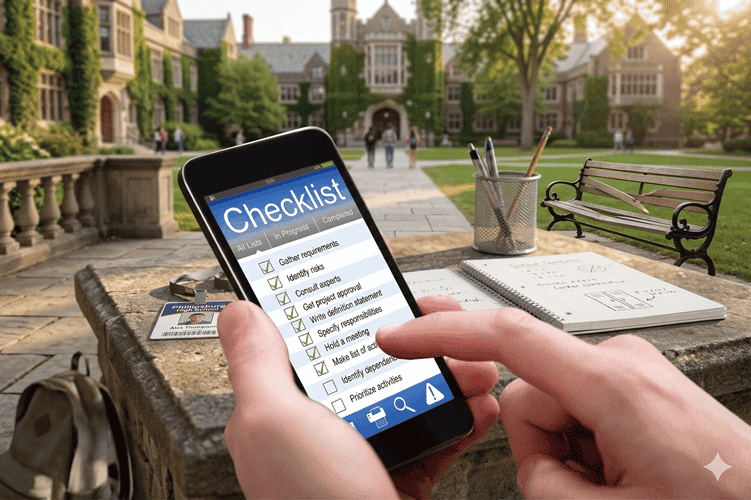
Digital checklist ensures campus maintenance compliance and audit readiness
The issue was not whether maintenance was performed. It was whether the university could prove it consistently. The inspection exposed a structural weakness in documentation and tracking. Max recognized that relying on manual coordination and fragmented files would not withstand continued regulatory scrutiny. A more structured approach was necessary.
How Centralized CMMS Software Restored Verifiable Compliance
In the weeks following the inspection, Max began actively searching for a structured solution that could eliminate documentation gaps and prevent future compliance exposure. During his research, he learned about eWorkOrders , a centralized CMMS designed to automate inspections, manage preventive maintenance, and maintain audit-ready records across complex facilities environments.
What stood out immediately was its ability to connect every asset to a time-stamped service history while automatically generating recurring preventive tasks. Escalation rules ensured overdue inspections were flagged before they became compliance risks. Instead of relying on shared drives and manual reminders, all service requests flowed through a structured work order management system with clear ownership and digital verification.
Max moved forward with implementation.
Campus assets were migrated into the platform and linked to automated preventive schedules. Emergency lighting systems, generators, and critical infrastructure were tracked within one centralized system.
Technicians logged work directly into the CMMS, creating searchable documentation tied to each asset. Leadership gained real-time visibility into inspection status and compliance metrics through dashboard reporting.
Within one quarter, overdue preventive tasks declined, and documentation retrieval time was reduced significantly. During the next fire safety review, inspection records were generated instantly. The issue was no longer whether work had been completed. It was verifiable.
eWorkOrders transformed Max’s maintenance operations from reactive documentation recovery to structured, defensible oversight.
How eWorkOrders CMMS Software Helps Universities Eliminate Compliance Gaps
- Centralizes every service request in one system
- Automates preventive maintenance schedules
- Maintains time-stamped, audit-ready records
- Provides real-time visibility across all campus assets
- Reduces compliance risk before inspections begin
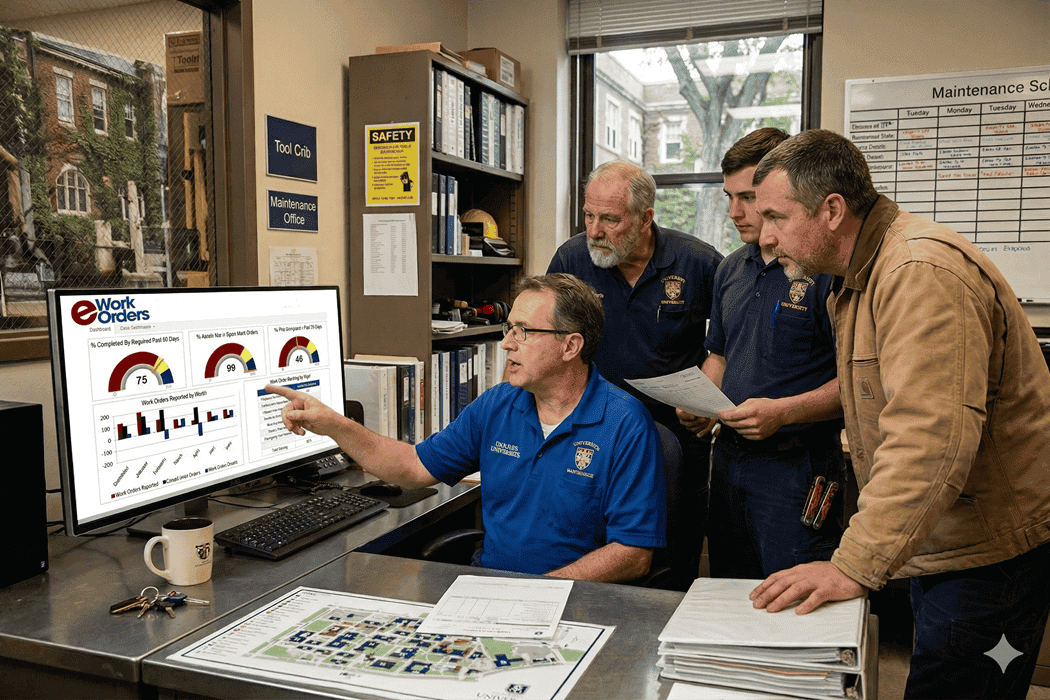
See Real-Time Maintenance Clarity in Action Across Campus.

CMMS dashboards provide real-time campus maintenance visibility
Why is CMMS Software Foundational for Universities?
Max’s audit scare did more than fix documentation gaps, it reshaped how his university manages maintenance. By implementing CMMS software from eWorkOrders, he replaced scattered spreadsheets with centralized control, automated preventive scheduling, and real-time compliance visibility.
Every service request now flows through a structured system, every asset has a traceable history, and every inspection is audit-ready.
What set eWorkOrders apart was its ability to adapt to campus complexity, configurable workflows, fast deployment, and clear dashboards built for operational oversight, not just task tracking.
For universities facing growing compliance pressure, structured visibility is no longer optional. Start Modernizing Your Maintenance Operations Today.
FAQs
1. What documentation does a university need to pass a fire safety inspection?
Universities must provide time-stamped records of completed inspections, including emergency lighting tests, generator servicing, and preventive maintenance logs. Using CMMS software ensures all documentation is centralized, accurate, and audit-ready.
2. How do you manage preventive maintenance across multiple campus buildings?
Managing preventive maintenance across multiple facilities requires a centralized work order management system that automates scheduling, assigns tasks, and tracks completion in real time. This prevents missed inspections and improves campus-wide visibility.
3. Can CMMS software replace spreadsheets for campus work order tracking?
Yes, CMMS software replaces spreadsheets, paper files, and email threads by centralizing all maintenance activities into one system. This improves accuracy, reduces manual tracking, and ensures every work order is documented and traceable.
Eliminate Inspection Gaps with eWorkOrders’ Fully Automated CMMS Software
Compliance failures rarely start with negligence; they start with invisible gaps. eWorkOrders CMMS software transforms reactive maintenance into structured, auditable control across campus operations.
- Centralize service workflows
- Automate preventive maintenance
- Maintain audit-ready documentation
- Improve cross-department accountability
- Strengthen institutional credibility
Don’t wait for the next inspection to test your system.


