Commercial Mixer Maintenance Checklist
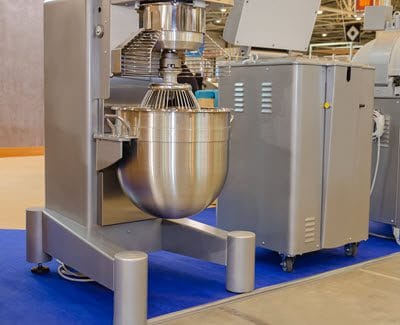
A mixing bowl that isn’t fully locked in place doesn’t always announce it until it lifts under load mid-batch, and a mixer that’s gone too long without lubrication tends to fail with a seized gearbox rather than a gentle warning first. Whether it’s running dough in a bakery or batter in a food processing plant, most mixer failures trace back to something on this list: a worn belt nobody replaced, a seal that started leaking weeks ago, a safety interlock nobody tested. This checklist covers the before-each-use, daily, weekly, monthly, quarterly, and yearly maintenance tasks that keep a commercial mixer running safely. Check items off right here, or print the page below.
Before Each Use
- If you notice any issue, don’t use the mixer — have it repaired by a qualified technician first.
Daily Maintenance
- Some food-processing facilities use dry-ice cleaning on mixers — it removes stuck-on residue without scratching or corroding components.
Weekly Maintenance
- A squealing belt or a gearbox that sounds like it’s grinding or running out of time with the shaft is often audible before it’s visually obvious — worth listening for during a normal run, not just checking by eye.
Monthly Maintenance
- Vibration is often the first sign of imbalance, misalignment, or wear in the motor, gearbox, or couplings. eWorkOrders integrates with condition-monitoring vendors like AssetWatch that can auto-generate a work order when vibration crosses a set threshold — catching a developing fault before it shows up on next month’s checklist.
Quarterly Maintenance
- If something has struck the shaft, it can bend out of true and cause vibration under load — a straight-edge laid against the shaft is a quick way to confirm it’s still aligned.
Yearly Maintenance
Note: These are general suggestions to strengthen a preventive maintenance checklist. The exact checklist your equipment needs depends on your facility and industry regulations — treat this as a strong foundation, not a complete list, and customize it to your organization. Always consult the manufacturer’s maintenance guidelines for specific instructions.
Essential Tips for Maintaining Your Commercial Mixer
Safety First: Always turn the mixer off and unplug it before adjusting, cleaning, or servicing it. Avoid loose clothing, jewelry, or anything that could get caught in moving parts, and tie back long hair.
Keep Guards in Place: Confirm all safety guards and shields are in place before turning the machine on — they exist specifically to keep hands away from moving parts.
Agitator Height: Keep the agitator height adjusted to the manufacturer’s spec. Too low can damage the bowl; too high and ingredients won’t mix properly.
Oil on a Schedule: You don’t need to oil a mixer daily, but keep to a schedule — components like the sliding bowl height adjustor typically need oiling twice a year, and a squeaking gear housing needs it immediately.
Use the Right Attachments: The wrong attachment, or one that isn’t properly secured, can damage the mixer and ruin the mix.
Don’t Overload It: Running the mixer beyond its rated capacity stresses the motor and gearbox and shortens the machine’s life.
Disassemble It Periodically: A wipe-down after each use is good practice, but it’s not a substitute for periodically taking the mixer apart for a real deep clean, ideally on a day the kitchen or line is down.
Keep It Dry: Water inside the housing causes rust and premature failure — dry the mixer thoroughly and immediately after washing, and avoid high-pressure cleaning that can force water into the inner workings.
Replace Worn Belts Early: A worn belt is a matter of when, not if, it breaks — replace it as soon as wear shows rather than waiting for failure.
Address Leaking Seals Immediately: A leaking seal won’t fix itself and tends to get worse. Replace it right away, or call a certified technician if you’re not sure how.
Train Your Team: Staff who know how to do basic daily checks keep the mixer maintained even when a dedicated maintenance person isn’t on site.
Bring in a Technician Regularly: High-use mixers in particular benefit from a periodic inspection by a qualified technician, beyond what a visual daily check can catch.
Store It Clean and Dry: When a mixer is out of use for any length of time, store it clean and in a dry place to prevent corrosion.
Follow the Manufacturer’s Schedule: Their recommended intervals are based on the specific machine — use them as the baseline and adjust for your actual usage.
Frequently Asked Questions (FAQs)
How often should a commercial mixer be lubricated?
It depends on the component — gears are typically checked weekly, while some parts like the bowl-lift mechanism may only need lubrication a couple of times a year. Always follow the manufacturer’s specific schedule rather than a one-size-fits-all rule.
What does unusual vibration in a mixer usually mean?
It’s often an early sign of imbalance, misalignment, or wear in the motor, gearbox, or couplings — the kind of problem that’s cheap to fix when caught early and expensive once it causes a bearing or shaft failure.
How can I tell if a mixer’s belts or gears are wearing out before they fail?
Listen as well as look. A squealing sound usually means a belt is worn, and a gearbox that sounds like it’s grinding or running out of time with the shaft is signaling a problem worth addressing immediately.
Why does bowl lock matter so much for mixer safety?
A bowl that isn’t fully locked can lift or shift under load mid-batch, which is both a quality problem and a real injury risk if hands are near the bowl when it happens. It’s worth checking before every single use, not just periodically.
Can a commercial mixer be cleaned with high-pressure water?
It’s not recommended — high-pressure cleaning can force water into the mixer’s internal components, leading to rust and premature failure. Hand-wash attachments and the bowl, wipe down the exterior, and dry everything thoroughly and immediately.
Managing Mixer Maintenance with a CMMS
A kitchen or plant with more than one mixer turns this checklist into a lot of recurring tasks to track across multiple machines. eWorkOrders CMMS keeps it organized instead of relying on memory or a paper log.
PM Scheduling
Preventive maintenance schedules generate the daily, weekly, monthly, quarterly, and yearly tasks on this checklist automatically, and assign them to the right technician.
Work Order Tracking
Work orders can be tracked in real time from assignment through completion, so nothing sits unaddressed.
Maintenance History, Kept
Every mixer’s service history — belt replacements, seal repairs, lubrication dates — stays tied to that specific asset, which is exactly the maintenance record the “keep a log” advice above is asking for, without a separate paper system.
Reporting
Reports on maintenance activity help identify which mixer is costing the most in repairs or downtime, so you know where to focus.
Additional Resources
Most Mixer Failures Trace Back to Something on This Checklist
A worn belt nobody replaced, a seal that started leaking weeks ago, a safety interlock nobody tested — it’s almost always a skipped check, not a sudden surprise. eWorkOrders lets your team schedule the before-use, daily, weekly, monthly, quarterly, and yearly checks, assign them to the right person, and keep each mixer’s maintenance history connected.
Note: This checklist provides general guidelines for commercial mixer maintenance. Specific requirements vary by make, model, and application — always consult your mixer manufacturer’s maintenance schedule and a qualified technician for guidance specific to your equipment.


