Wastewater treatment plants are among the most critical infrastructure systems supporting public health, environmental protection, and regulatory compliance. Municipal utilities and water authorities depend on these facilities to process wastewater, manage biosolids, and ensure treated effluent meets environmental discharge standards.
Modern utilities are adopting Wastewater CMMS software and treatment plant maintenance management systems to digitize maintenance workflows, automate preventive servicing, and improve infrastructure visibility. The following best practices outline proven wastewater treatment plant maintenance strategies used across municipal and industrial operations.
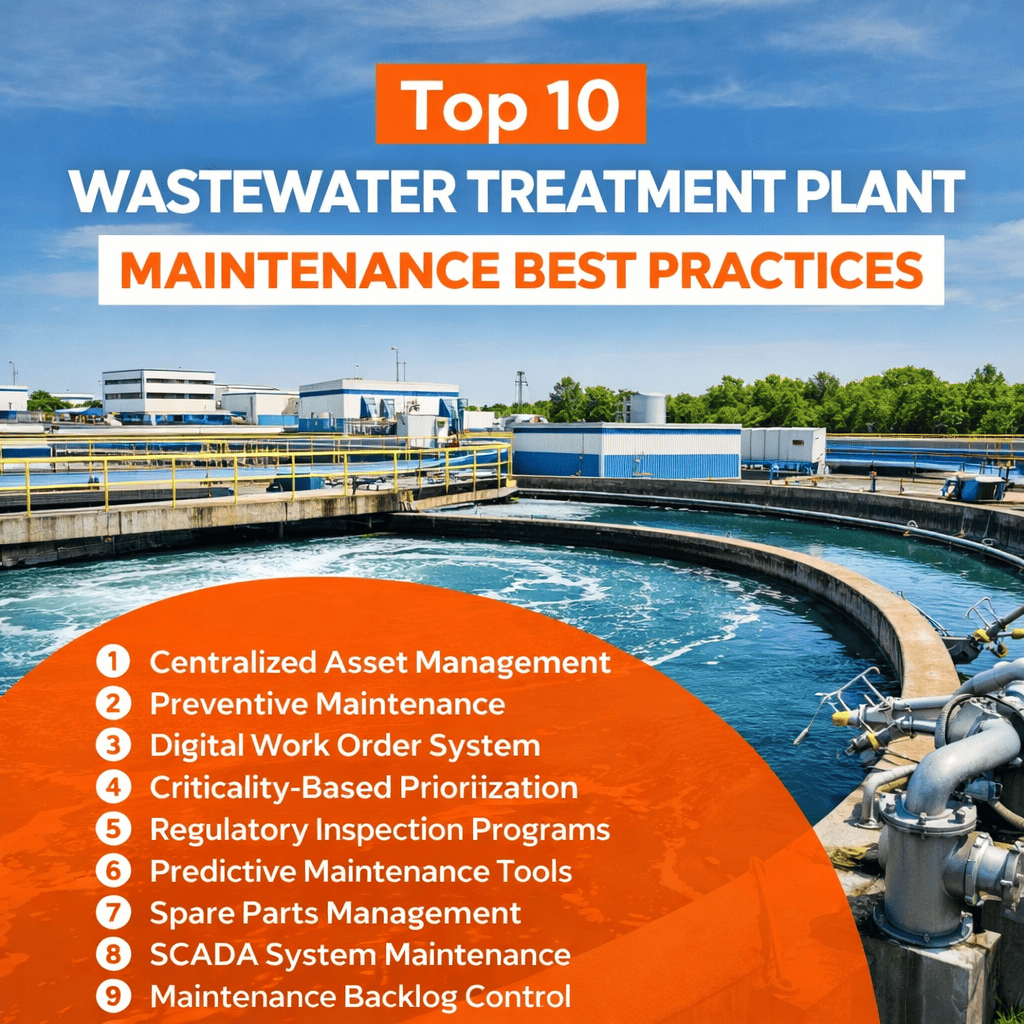
Top 10 Wastewater Treatment Plant Maintenance Best Practices
1. Establish a Centralized Wastewater Asset Management System
Centralized asset management provides full visibility into interconnected wastewater infrastructure assets and supports lifecycle planning.
- Influent and effluent pumps
- Lift stations
- Aeration blowers
- Clarifiers and digesters
- Screens and grit systems
- Chemical dosing equipment
- Filtration and disinfection systems
2. Implement Preventive Maintenance Programs
- Pump lubrication and seal inspections
- Motor alignment testing
- Aeration diffuser cleaning
- Valve calibration
- Filter media replacement
3. Digitize Work Order Management
- Real-time maintenance requests
- Automated task assignment
- Priority classification
- Labor tracking
- Completion verification
4. Prioritize Maintenance by Asset Criticality
- Influent pumping stations
- Aeration systems
- Disinfection equipment
- Sludge processing units
5. Strengthen Regulatory Inspection Programs
- Clarifier inspections
- Effluent monitoring calibration
- Chemical dosing verification
- Containment checks
6. Implement Predictive Maintenance Technologies
- Vibration analysis
- Thermal imaging
- Oil analysis
- Flow monitoring
7. Optimize Spare Parts and Inventory Management
- Critical spare stocking
- Pump rebuild kits
- Seal inventories
- Dosing components
8. Maintain SCADA and Automation Systems
- Sensor calibration
- PLC inspections
- Alarm testing
- Network validation
9. Manage Maintenance Backlog Proactively
- Weekly backlog reviews
- Preventive vs corrective balancing
- Labor planning
- Aging work analysis
10. Leverage CMMS for Wastewater Maintenance Management
- Asset lifecycle tracking
- Preventive automation
- Inspection documentation
- Compliance reporting
- Cost analytics
- Mobile technician access
How Wastewater CMMS Software Improves Treatment Plant Maintenance
Wastewater CMMS platforms centralize maintenance operations across treatment infrastructure, pumping systems, and processing equipment. By digitizing work orders and automating preventive maintenance, utilities gain real-time operational visibility.
- Preventive maintenance automation
- Infrastructure lifecycle tracking
- Inspection documentation
- Spare parts inventory management
- Mobile workforce enablement
- Downtime and cost analytics
These capabilities help wastewater utilities maintain compliance, reduce downtime, and extend infrastructure lifespan.
Why Wastewater Maintenance Best Practices Matter
Structured wastewater maintenance programs help utilities reduce equipment failures, maintain regulatory compliance, protect environmental safety, and ensure continuous treatment operations.
Conclusion: Sustaining Wastewater Infrastructure Reliability
Wastewater treatment plants operate under constant operational and regulatory pressure. Structured maintenance management—supported by preventive servicing, predictive monitoring, and digital work order coordination—ensures treatment continuity and compliance.
Many utilities leverage CMMS platforms like eWorkOrders to centralize wastewater maintenance, automate inspections, and monitor infrastructure performance.
Frequently Asked Questions (FAQs)
What is wastewater treatment plant maintenance?
It involves servicing, inspecting, and repairing treatment infrastructure to ensure operational reliability and compliance.
Why is preventive maintenance critical in wastewater plants?
Corrosive environments and continuous operations accelerate equipment wear, making preventive servicing essential.
How does CMMS improve wastewater maintenance?
CMMS centralizes asset tracking, automates maintenance scheduling, and improves compliance reporting.
What equipment requires the most maintenance?
Pumps, aeration systems, clarifiers, digesters, and disinfection systems.
How can wastewater plants reduce downtime?
Through predictive monitoring, preventive maintenance, and automated work order management.


