Healthcare facilities depend on continuous equipment performance, infrastructure reliability, and regulatory compliance to sustain patient care operations. Maintenance failures in hospitals extend beyond operational inconvenience — they create clinical, financial, and safety risks.
As hospital environments become more technology-driven, maintenance leaders face mounting pressure to improve uptime, automate preventive servicing, and maintain audit readiness across biomedical and facility assets.
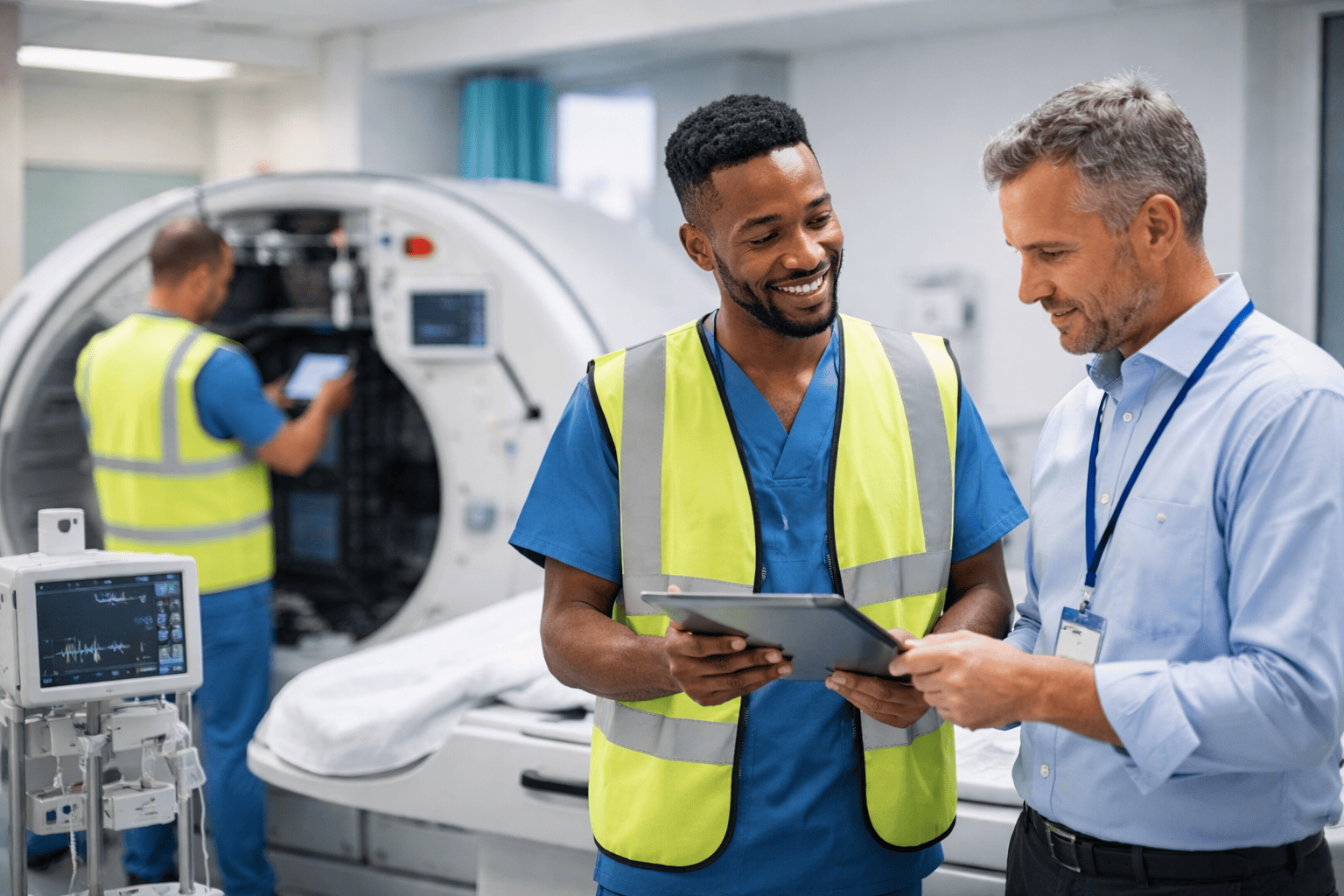
Understanding the Operational Pressures Behind Healthcare Maintenance
Hospital maintenance teams must coordinate clinical engineering, facilities infrastructure, compliance inspections, and emergency preparedness systems simultaneously. These overlapping responsibilities create systemic challenges that traditional maintenance models struggle to support.
Equipment Reliability and Preventive Maintenance Challenges
1. Unplanned Equipment Downtime
Unexpected failures disrupt treatment schedules and patient care continuity.
2. Preventive Maintenance Completion Gaps
Missed servicing intervals increase equipment failure probability.
3. Biomedical Asset Tracking Limitations
Mobile medical equipment often lacks real-time visibility.
- Diagnostic imaging systems
- Infusion pumps
- Patient monitors
- Surgical tools
Compliance and Regulatory Risk Factors
4. Inspection Documentation Complexity
Hospitals must maintain detailed service records across thousands of assets.
5. Certification and Calibration Tracking
Biomedical devices require recurring testing and validation.
6. Life-Safety System Compliance
Fire systems, emergency lighting, and generators require strict inspections.
Operational Workflow and Resource Constraints
7. Work Order Backlogs
High request volumes create response delays.
8. Technician Workforce Coordination
Balancing biomedical engineers and facility technicians is complex.
9. Inventory and Spare Parts Visibility
Critical component shortages delay repairs.
10. Aging Healthcare Infrastructure
Legacy hospital facilities face increasing breakdown risks across electrical, HVAC, plumbing, and environmental control systems.
How CMMS Platforms Resolve These Healthcare Maintenance Challenges
Healthcare CMMS software provides a centralized operational framework that connects assets, maintenance workflows, compliance documentation, and reporting analytics.
- Preventive maintenance automation
- Biomedical asset lifecycle tracking
- Digital compliance documentation
- Work order digitization
- Inventory management
- KPI performance dashboards
Platforms such as eWorkOrders CMMS support hospitals in transitioning from reactive maintenance environments to predictive, data-driven asset management strategies.
Operational Improvements Hospitals Achieve
- Reduced equipment downtime
- Higher preventive maintenance completion
- Improved compliance readiness
- Lower maintenance costs
- Extended biomedical asset lifespan
Frequently Asked Questions
What is healthcare CMMS software?
Software that centralizes hospital maintenance, assets, and compliance workflows.
How does CMMS improve hospital compliance?
By automating inspections and maintaining audit-ready records.
Why is preventive maintenance critical in healthcare?
It protects patient safety and reduces equipment failures.
Can CMMS track biomedical equipment?
Yes, including imaging and life-support systems.
How does CMMS reduce hospital downtime?
Through predictive analytics and preventive servicing.


