Maintenance within the Department of Public Works (DPW) goes far beyond routine upkeep. DPW maintenance directly supports public safety, economic stability, regulatory compliance, and community quality of life.
As infrastructure continues to age and expectations rise, DPWs are adopting data-driven, AI-supported maintenance strategies to improve efficiency, reduce costs, and deliver more transparent public services.
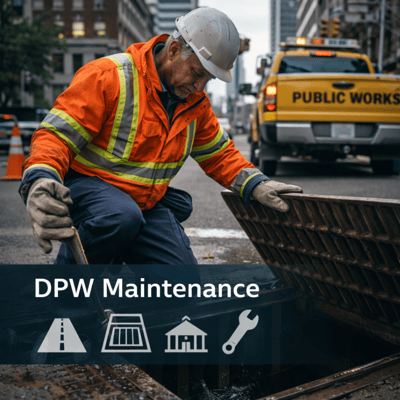
What Is DPW Maintenance and Why Is It Important?
DPW maintenance refers to the ongoing inspection, repair, and management of municipal infrastructure and public assets owned or operated by local governments and public agencies.
These assets include roads, sidewalks, drainage systems, public lighting, fleet vehicles, and public facilities.
Effective DPW maintenance is essential because it:
- Protects public safety
- Prevents costly infrastructure failures
- Extends asset lifespan
- Minimizes service disruptions
- Preserves community trust and quality of life
Without proactive maintenance programs, minor issues can escalate into emergencies that strain budgets and public confidence.
Top Questions About DPW Maintenance
What Services Are Included in DPW Maintenance?
While responsibilities vary by municipality, DPW maintenance typically includes:
- Road and street maintenance
- Stormwater and drainage system upkeep
- Traffic signs and streetlight installation and repair
- Fleet and heavy equipment maintenance
- Public facility and building maintenance
- Landscaping and right-of-way management
How Does DPW Handle Routine Maintenance?
Routine or preventive maintenance focuses on scheduled inspections and servicing designed to prevent failures before they occur.
- Visual and structural inspections
- Cleaning and debris removal
- Lubrication and calibration
- Minor repairs before escalation
Many DPWs now use maintenance data and analytics to optimize schedules based on asset condition, usage, and environmental factors.
What Technologies Are Transforming DPW Maintenance?
Technology plays a central role in modern public works maintenance programs. Key tools include:
- CMMS software for work orders, assets, and scheduling
- AI and predictive analytics
- Mobile maintenance applications
- GIS and mapping tools
How Does DPW Handle Emergency Maintenance?
Emergency maintenance addresses unexpected failures or safety hazards such as:
- Downed trees blocking roadways
- Water main breaks
- Streetlight or power outages
- Storm or flood damage
- Sinkholes and structural failures
Response is prioritized based on public safety risk, traffic impact, and service criticality.
How Do Residents Report DPW Maintenance Issues?
Public reporting is a critical component of effective DPW maintenance. Common reporting channels include:
- Online service request portals
- Mobile citizen reporting apps
- Dedicated phone hotlines
- Community engagement platforms
What Are the Biggest Challenges Facing DPW Maintenance Teams?
- Limited budgets and staffing constraints
- Aging infrastructure requiring frequent repair
- Balancing preventive maintenance with emergency response
- Coordinating with utilities and external agencies
- Demonstrating ROI to justify funding
Best Practices for Effective DPW Maintenance
Asset Management
Maintaining accurate asset records supports smarter planning, budgeting, and lifecycle decisions.
Data-Driven Prioritization
Inspection and performance data help teams focus resources on high-risk and high-impact assets.
Technology Integration
CMMS software, AI tools, mobile platforms, and GIS systems improve coordination, accountability, and response times.
Community Engagement
Clear communication and accessible reporting tools improve public confidence and service outcomes.
Continuous Improvement
Tracking performance metrics and reviewing trends helps reduce costs and improve efficiency over time.
Conclusion: The Future of DPW Maintenance
DPW maintenance is evolving rapidly. While core responsibilities remain essential, AI, predictive analytics, and digital maintenance platforms are redefining how departments plan, prioritize, and execute work.
Modern CMMS platforms such as eWorkOrders CMMS support this evolution by helping public works departments centralize maintenance operations and gain real-time performance visibility.
By combining proven practices with modern technology, DPWs can keep infrastructure safe, resilient, and ready for the future.
Frequently Asked Questions About DPW Maintenance
What does DPW maintenance include?
DPW maintenance includes upkeep of roads, sidewalks, drainage systems, streetlights, public buildings, signage, and municipal equipment.
How does DPW prioritize maintenance work?
Maintenance is prioritized based on safety risk, asset condition, public impact, and regulatory requirements.
What is the difference between preventive and reactive maintenance?
Preventive maintenance focuses on scheduled inspections and repairs, while reactive maintenance occurs after a breakdown or incident.
How is technology improving DPW maintenance?
DPWs use CMMS software, GIS mapping, mobile reporting tools, and AI-powered analytics to improve visibility and planning accuracy.
How can residents report DPW maintenance issues?
Residents report issues through online portals, mobile apps, or dedicated phone lines.


