Agriculture and farming operations depend heavily on equipment uptime, irrigation systems, storage facilities, and fleet reliability. When maintenance processes are reactive or unstructured, farms face crop loss, equipment breakdowns, rising operational costs, and seasonal disruptions.
Modern agricultural organizations are adopting Agriculture CMMS software and farm maintenance management systems to digitize maintenance workflows, automate preventive scheduling, and improve asset visibility. The following best practices outline proven strategies to improve equipment reliability, streamline field operations, and support long-term agricultural productivity.
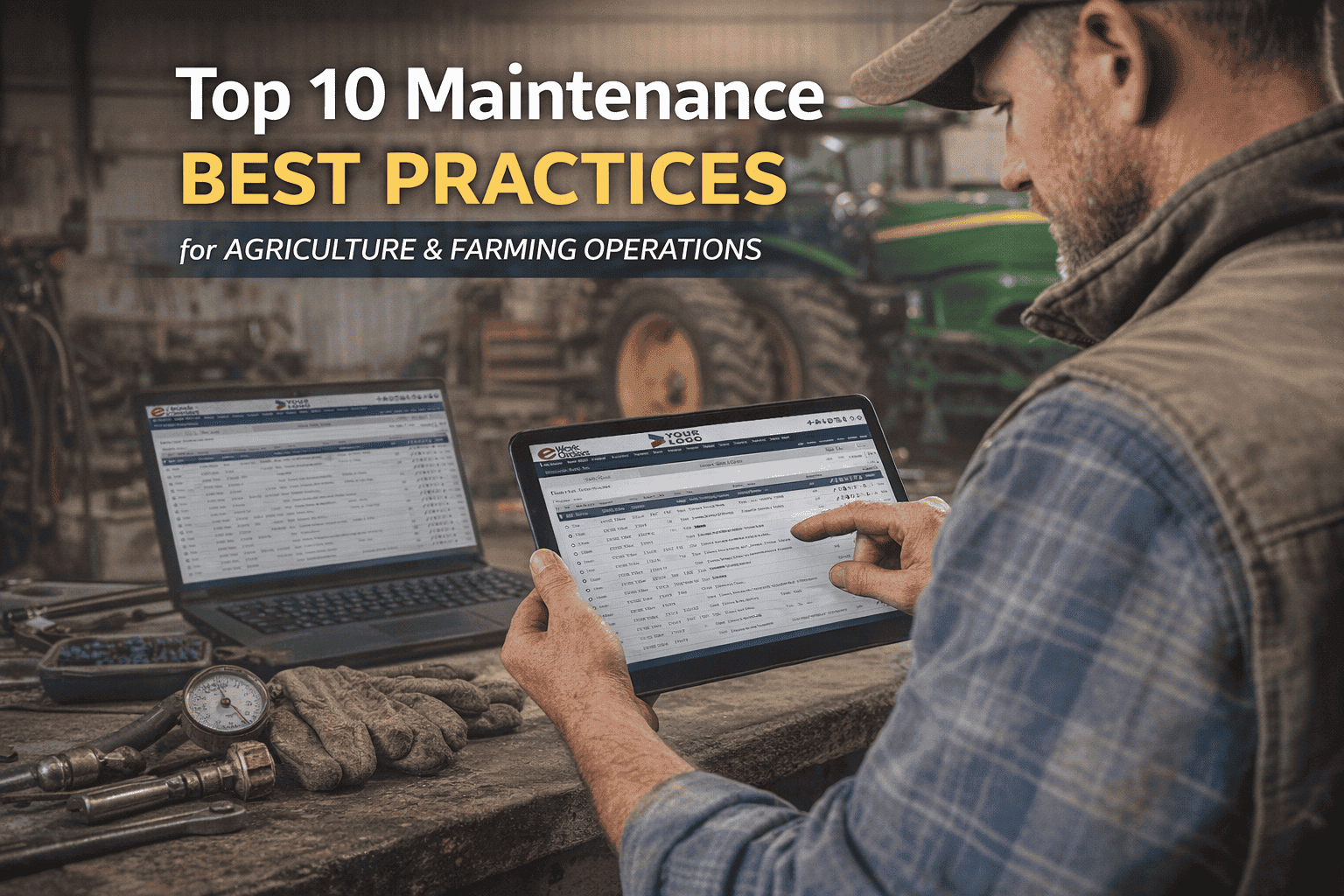
10 Agriculture & Farming Maintenance Best Practices
1. Track All Agricultural Assets with CMMS
Using agricultural asset management software allows farms to track tractors, harvesters, irrigation pumps, and storage infrastructure. Asset lifecycle visibility improves maintenance planning and accountability.
2. Implement Preventive Maintenance Schedules
Preventive maintenance software helps reduce breakdowns during planting and harvest seasons through automated service reminders, inspections, and equipment servicing.
3. Prepare Equipment for Seasonal Demands
Farm equipment maintenance software ensures machinery is calibrated, inspected, and ready before peak agricultural seasons begin.
4. Digitize Work Orders with Farm Maintenance Software
- Mobile maintenance requests
- Real-time repair tracking
- Labor and parts documentation
- Faster issue resolution
5. Monitor Irrigation and Water Systems
- Pump maintenance tracking
- Leak detection
- Valve inspections
- Water usage optimization
6. Manage Spare Parts Inventory
CMMS platforms for agriculture help farms manage critical spare parts, forecast seasonal demand, and automate reorders.
7. Enable Mobile CMMS Access for Field Technicians
- Work order updates from the field
- Photo documentation
- QR-code and barcode asset lookup
- Faster repair close-out
8. Track Equipment Downtime and Maintenance Costs
Downtime analytics within farm maintenance management systems help identify chronic failures and optimize asset replacement planning.
9. Standardize Safety and Compliance Inspections
Digital inspection checklists ensure agricultural equipment meets operational and regulatory safety requirements.
10. Use Data Analytics to Drive Farm Decisions
AI-driven CMMS analytics enable predictive maintenance, failure forecasting, and operational efficiency improvements.
Track Usage Hours, Not Just the Calendar
Engine hours drive farm preventive maintenance more than dates do, because a tractor pulling a heavy tillage tool for twelve hours a day ages far faster than one running light loader work. Manufacturers publish service intervals in hours — oil and filters at 250 or 500 hours, hydraulic fluid around 1,000 — so the hour-meter on each machine is what tells you what is actually due.
Log hours per unit and let the system trigger the work order automatically when a threshold is reached. The 500-hour service on a combine then gets scheduled before the machine goes to the field rather than after a failure. Tracking engine hours, acres worked, and fuel burn together also gives an early read on machines trending toward trouble.
Rule of thumb: set preventive maintenance triggers on whichever comes first, hours or calendar. A sprayer used only six weeks a year still needs annual seal and nozzle service even if it never reaches its hour threshold.
Seasonal Farm Maintenance Schedule
Agricultural work is seasonal, so the maintenance plan should be too — heavy inspection and overhaul happen in the off-season, light checks happen daily during the run. The framework below suits most row-crop and mixed operations.
| Season | Focus | Key tasks |
|---|---|---|
| Pre-season | Get planters and tractors field-ready | Full inspection, fluid and filter changes, calibrate planters, replace worn belts and chains, test hydraulics and electronics |
| Planting | Keep uptime high | Daily walkarounds, grease points, check tire pressure, monitor engine hours, fix small issues same day |
| Growing season | Sprayers and irrigation | Nozzle and pump checks, clean filters, inspect irrigation lines and pivots, service haying equipment |
| Harvest | Protect the combine window | Daily combine inspection, belt and chain tension, bearing and concave checks, keep critical spares on hand |
| Post-harvest / winter | Overhaul and store | Deep cleaning, major repairs, rust prevention, fuel stabilizer, battery care, plan next year’s parts |
Storing this schedule in a CMMS built for agriculture means each task recurs automatically and no machine slips through the cracks between seasons. Getting spare parts inventory right protects both uptime and cash — you carry what you will actually need and stop over-ordering what you will not.
For the five problems that break farm maintenance most often, and the CMMS fix for each, see our guide to agricultural equipment maintenance challenges.
How Agriculture CMMS Software Improves Farm Maintenance
Agriculture CMMS platforms centralize maintenance operations across farming equipment, irrigation systems, and agricultural infrastructure. By digitizing work orders and automating preventive maintenance, farms gain real-time visibility into asset performance and operational readiness.
- Automated preventive maintenance scheduling
- Farm equipment lifecycle tracking
- Irrigation maintenance monitoring
- Spare parts inventory management
- Mobile field service management
- Downtime and cost analytics
These capabilities help agricultural organizations reduce unplanned downtime, extend machinery lifespan, and improve seasonal productivity.
Why Agriculture Maintenance Best Practices Matter
Structured maintenance supported by agriculture CMMS software helps farms reduce equipment downtime, protect crop yields, control repair costs, improve worker safety, and ensure operational continuity during critical planting and harvest windows.
Conclusion: Growing Efficiency Through Proactive Farm Maintenance
Agriculture operations rely on asset reliability and seasonal readiness. By implementing structured maintenance workflows and leveraging farm maintenance software, organizations can reduce disruptions, extend equipment life, and improve productivity.
Many agricultural organizations leverage CMMS platforms like eWorkOrders to centralize maintenance, automate preventive scheduling, and gain real-time operational visibility across farming assets and infrastructure.
Frequently Asked Questions (FAQs)
What is agriculture CMMS software?
Agriculture CMMS software is a farm maintenance management system used to track equipment, schedule preventive maintenance, manage work orders, and monitor irrigation and infrastructure assets. It replaces whiteboards, spreadsheets, and paper service records with a single register covering every tractor, harvester, pump, and storage building, so managers can see what is due, what is overdue, and what each machine has cost to keep running.
Why is preventive maintenance important in farming?
Preventive maintenance reduces breakdowns during the narrow planting and harvest windows, when a failure costs far more than the repair itself. Servicing on schedule also extends machinery lifespan, protects resale value, and keeps equipment inside manufacturer warranty terms, which are usually written around hour-based service intervals rather than calendar dates.
How does CMMS help farming operations?
A CMMS centralizes maintenance across every machine and site, automates preventive scheduling by engine hours or date, tracks spare parts with reorder points, and records the full service history of each asset. That gives farm managers real-time visibility into what is field-ready, what is waiting on parts, and which machines are consuming the maintenance budget.
What equipment should farms track?
Tractors, harvesters and combines, planters, sprayers, irrigation systems and pumps, grain handling and storage facilities, and transport vehicles. Each should carry its own asset record with hours, warranty details, service history, and the critical spare parts it depends on.
Can maintenance software reduce farming costs?
Yes. It reduces emergency repairs by catching wear before failure, improves repair planning so work happens in the shop rather than mid-field, keeps spare parts stocked without over-ordering, and extends asset lifecycle value. It also produces the cost-per-asset data that shows when a machine has become more expensive to keep than to replace.
How often should farm equipment be serviced?
Service intervals are driven by engine hours as much as by the calendar — typically oil and filters every 250 to 500 hours and hydraulic fluid around 1,000 hours, plus a full pre-season inspection and an off-season overhaul. Follow the manufacturer’s hour-based intervals and service on whichever comes first, hours or time.


