Maintenance teams manage a constant flow of repair requests, preventive maintenance tasks, inspections, and asset servicing activities. When work order processes rely on paper forms, emails, or spreadsheets, inefficiencies quickly emerge—leading to delayed response times, lost requests, communication gaps, and operational disruptions.
Work order automation CMMS software addresses these challenges by digitizing, standardizing, and streamlining maintenance workflows. By automating task creation, assignment, tracking, and reporting, organizations gain real-time visibility into maintenance operations while improving execution speed, asset reliability, and workforce accountability.
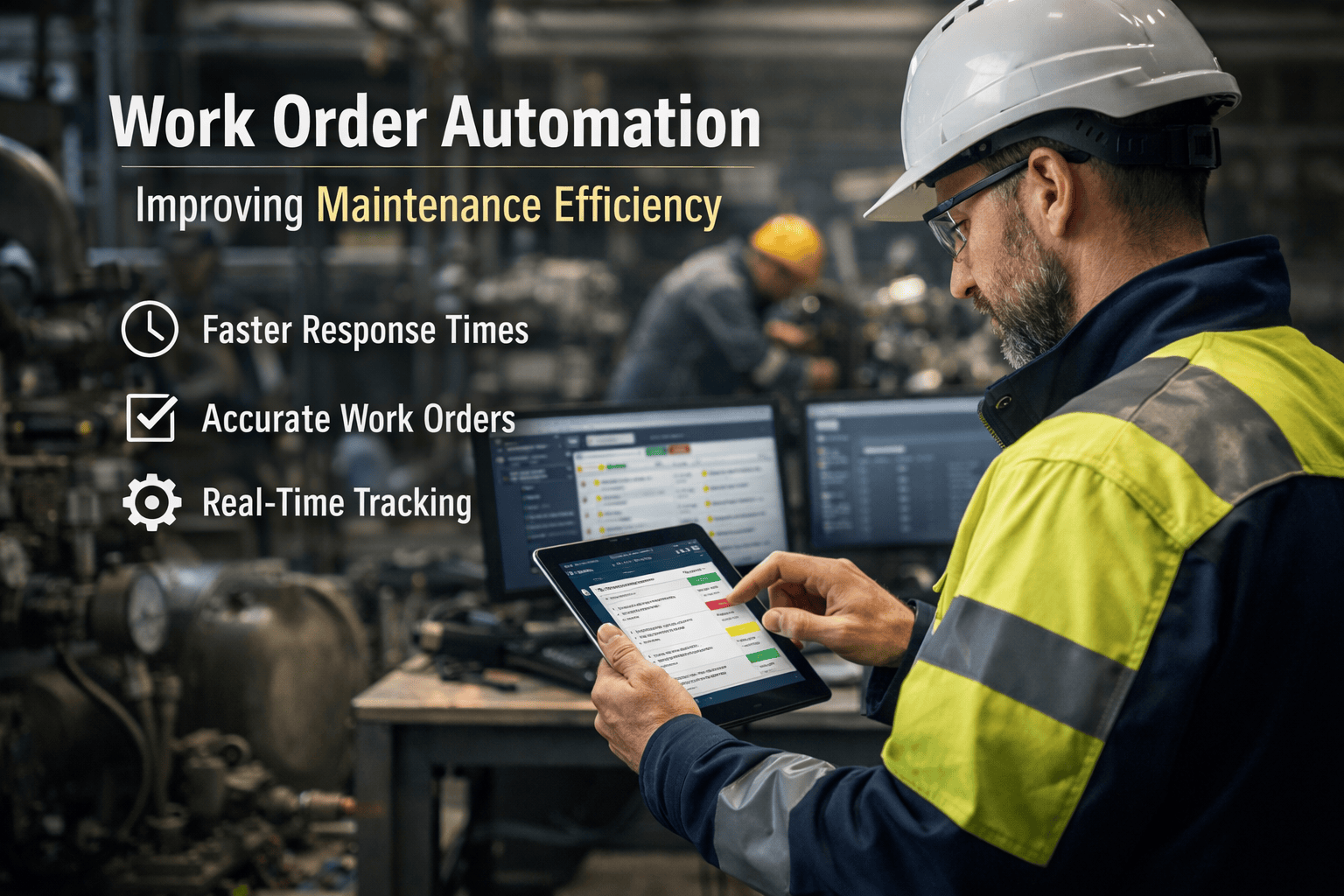
The Growing Complexity of Maintenance Workflows
Modern facilities, plants, campuses, and infrastructure environments generate high volumes of maintenance requests daily. Without automated work order management systems, teams struggle to prioritize tasks, allocate technicians, and maintain preventive maintenance compliance.
- Lost or delayed maintenance requests
- Incomplete service documentation
- Inefficient technician dispatching
- Lack of real-time work order tracking
- Poor preventive maintenance scheduling
What Is Work Order Automation in CMMS Software?
Work order automation refers to the use of CMMS software to automatically generate, assign, prioritize, and track maintenance tasks. Automation replaces manual workflows with digital processes triggered by asset events, preventive maintenance schedules, or service requests.
- Preventive maintenance auto-generation
- Digital request portals
- Technician auto-assignment
- Priority classification
- Status dashboards
- Completion reporting
Key Benefits of Work Order Automation Software
1. Faster Maintenance Response Times
Automated routing accelerates request handling and technician dispatch.
2. Improved Work Order Accuracy
Standardized digital forms ensure accurate asset, issue, and location data.
3. Preventive Maintenance Automation
CMMS platforms auto-generate recurring service work orders.
4. Enhanced Technician Productivity
Mobile CMMS access enables real-time updates and digital checklists.
5. Real-Time Maintenance Visibility
Dashboards track open, in-progress, and completed work orders.
6. Reduced Equipment Downtime
Faster response and scheduled servicing prevent asset failures.
7. Standardized Maintenance Workflows
Automation enforces compliance and service consistency.
8. Advanced Maintenance Reporting
- Mean Time to Repair (MTTR)
- PM compliance
- Labor utilization
- Failure trends
9. Improved Communication
Automated notifications keep teams aligned.
10. Multi-Site Maintenance Scalability
Centralized CMMS systems manage operations across locations.
How CMMS Work Order Automation Software Works
- Asset-triggered maintenance requests
- Preventive maintenance scheduling
- Inventory-linked repair work orders
- Mobile technician dispatch
- Labor and cost tracking
- Downtime analytics reporting
Industries That Benefit from Work Order Automation
Manufacturing, facilities management, healthcare, education, agriculture, utilities, logistics, and government organizations all rely on CMMS work order automation to manage maintenance at scale.
Conclusion: Advancing Maintenance Efficiency Through Automation
Work order automation improves maintenance operations by helping teams respond more quickly, standardize workflows, and maintain clear visibility of asset performance.
Platforms such as eWorkOrders CMMS provide tools for automating preventive maintenance, tracking assets and labor, and supporting overall maintenance efficiency.
Frequently Asked Questions (FAQs)
What is work order automation?
Work order automation uses CMMS software to create, assign, and track maintenance tasks automatically.
How does CMMS automate work orders?
CMMS platforms generate work orders based on schedules, asset usage, or maintenance triggers.
What are the benefits of automated work order systems?
They reduce downtime, improve efficiency, and enhance maintenance visibility.
Can preventive maintenance be automated?
Yes. Preventive maintenance work orders are auto-generated.
What industries use work order automation software?
Manufacturing, healthcare, facilities, education, agriculture, and utilities.


