Asset Lifecycle Management: Strategies to Maximize Asset Performance & ROI
Asset lifecycle management plays a critical role in maintaining asset reliability, controlling costs, and maximizing operational performance. Organizations depend on physical assets—from manufacturing equipment to facilities infrastructure—to sustain operations and deliver services.
Without structured lifecycle strategies supported by asset lifecycle management CMMS software, organizations face premature asset failure, rising maintenance costs, unplanned downtime, and inefficient capital planning.
Asset lifecycle management provides a framework for overseeing assets from acquisition through retirement—ensuring long-term value, operational stability, and performance optimization.
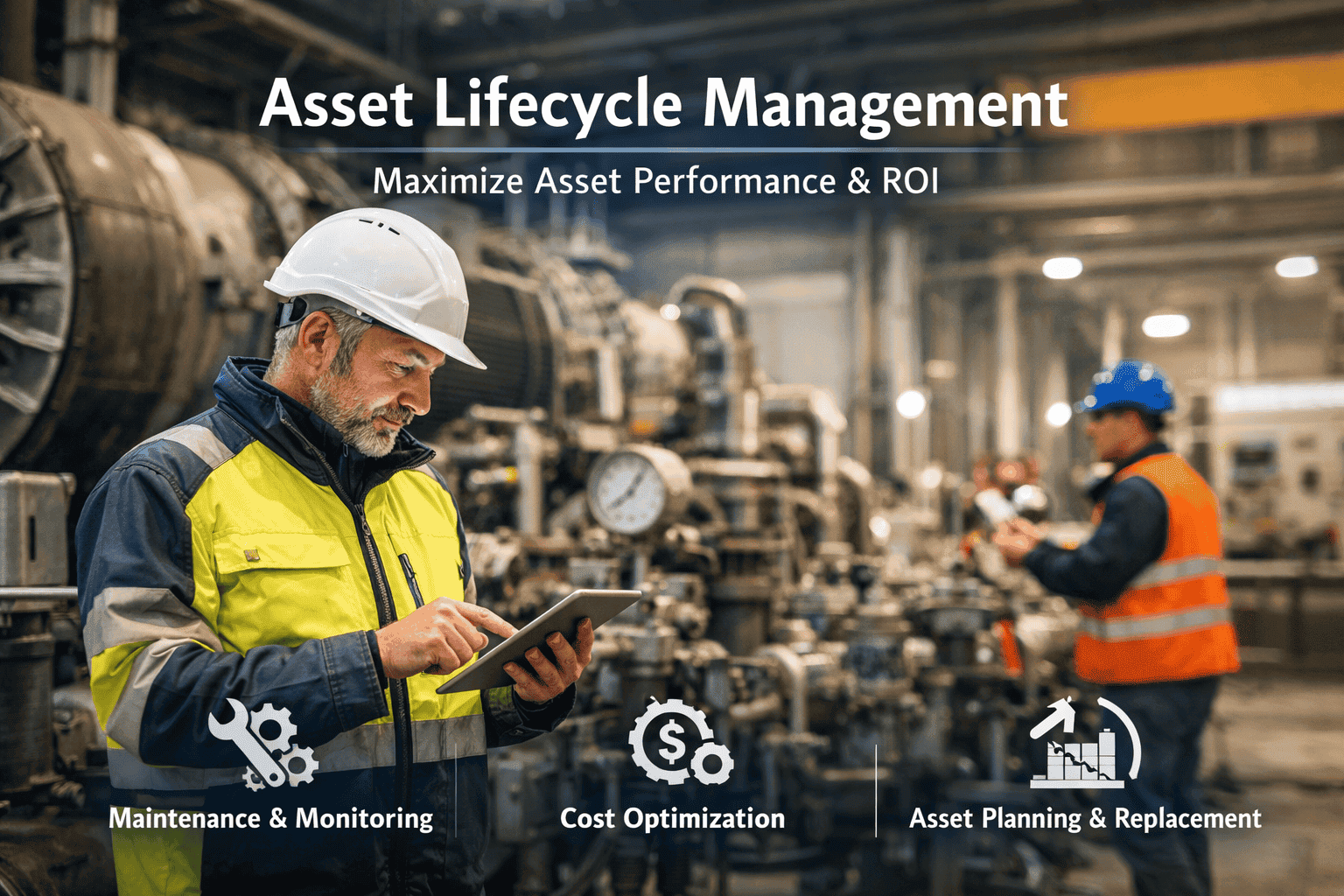
Understanding Asset Lifecycle Management
Asset lifecycle management (ALM) refers to the systematic strategy used to plan, acquire, operate, maintain, optimize, and replace physical assets using asset management software and CMMS lifecycle tracking systems.
- Asset planning and procurement
- Installation and commissioning
- Operation and utilization
- Preventive and predictive maintenance
- Performance optimization
- Refurbishment or upgrades
- Decommissioning and replacement
Why Asset Lifecycle Management Matters
- Reduce total cost of ownership (TCO)
- Improve asset reliability and uptime
- Extend equipment service life
- Strengthen preventive maintenance planning
- Support regulatory compliance
- Optimize capital investment decisions
Top 10 Asset Lifecycle Management Best Practices
1. Establish a Complete Asset Inventory
Maintain centralized asset records using asset tracking software.
2. Define Asset Criticality
Rank assets based on operational risk and downtime impact.
3. Implement Preventive Maintenance Programs
Prevent failures using CMMS preventive maintenance scheduling.
4. Leverage Predictive Maintenance Technologies
IoT sensors and analytics detect early deterioration.
5. Track Total Cost of Ownership
Analyze lifecycle maintenance and operational costs.
6. Maintain Detailed Asset Histories
Historical maintenance data supports lifecycle decisions.
7. Optimize Spare Parts Inventory
Ensure availability of critical lifecycle components.
8. Align Maintenance With Operational Demand
Schedule maintenance during low-impact periods.
9. Plan Capital Replacements Strategically
Forecast asset replacement needs using lifecycle analytics.
10. Use CMMS Asset Lifecycle Management Software
Centralize asset data, automate maintenance, and track lifecycle performance.
How CMMS Software Supports Asset Lifecycle Management
- Asset performance monitoring
- Preventive maintenance automation
- Lifecycle cost analytics
- Downtime tracking
- Replacement forecasting
- Capital planning insights
CMMS lifecycle management platforms provide real-time visibility into asset condition, maintenance history, and long-term performance trends.
Industries That Benefit from Asset Lifecycle Management
Manufacturing, facilities management, healthcare, education, utilities, transportation, government, and infrastructure organizations rely on asset lifecycle management software to manage physical assets at scale.
Conclusion: Turning Lifecycle Strategy Into Operational Value
Asset lifecycle management aligns maintenance, performance tracking, and capital planning into a unified operational strategy supported by CMMS software systems.
Many organizations rely on centralized platforms like eWorkOrders CMMS to manage lifecycle data, automate preventive maintenance, and optimize long-term asset performance.
Frequently Asked Questions (FAQs)
What is asset lifecycle management?
It is the strategic process of managing assets from acquisition through replacement.
How does CMMS support lifecycle management?
CMMS software tracks assets, automates maintenance, and provides lifecycle analytics.
Why is lifecycle management important?
It reduces downtime, improves reliability, and optimizes capital planning.
What industries use lifecycle management software?
Manufacturing, healthcare, facilities, utilities, and government sectors.
What is the goal of asset lifecycle management?
To maximize asset value, performance, and service life.


